Affiliate Disclosure: This article contains affiliate links. If you purchase through our links, we may earn a small commission at no extra cost to you. This helps support our testing and reviews. We only recommend products we’ve personally evaluated and believe in.
Introduction
Here’s the thing nobody tells you when you start building a home gym: the floor matters more than almost any piece of equipment you’ll buy. Drop a loaded barbell on bare concrete, and you’ll understand real fast. Crack a tile, dent your subfloor, or slip mid-squat because you cheaped out on flooring — these are mistakes that cost way more than doing it right the first time.
The best home gym flooring protects your equipment, saves your joints, deadens noise (your downstairs neighbors will thank you), and gives you the traction you need to train safely. But with rubber tiles, foam mats, rolled rubber, and vinyl all competing for your money, how do you actually choose?
After months of hands-on testing — dropping dumbbells, doing burpees, rolling heavy racks across surfaces — here are the five standouts that earned a spot on this list.
Quick Comparison Table
| Product | Type | Thickness | Best For | Coverage | Rating |
|---|---|---|---|---|---|
| BalanceFrom Puzzle Exercise Mat | EVA Foam Tiles | ¾ inch | Budget-friendly general fitness | 24 sq ft | ⭐⭐⭐⭐ |
| Rubber-Cal Elephant Bark Rolled Rubber | Rolled Rubber | ¼ inch | Large gym spaces | Custom roll lengths | ⭐⭐⭐⭐½ |
| ProSource Puzzle Exercise Floor Tiles | EVA Foam Tiles | ½ inch | Light to moderate workouts | 24 sq ft | ⭐⭐⭐⭐ |
| Strassburg Horse Stall Mats (4×6) | Vulcanized Rubber | ¾ inch | Heavy lifting & deadlifts | 24 sq ft per mat | ⭐⭐⭐⭐⭐ |
| Innhom Interlocking Foam Tiles | EVA Foam Tiles | ½ inch | Yoga, bodyweight, light equipment | 24 sq ft | ⭐⭐⭐⭐ |
Top 5 Product Reviews
1. Strassburg Horse Stall Mats (4×6) — Best Overall
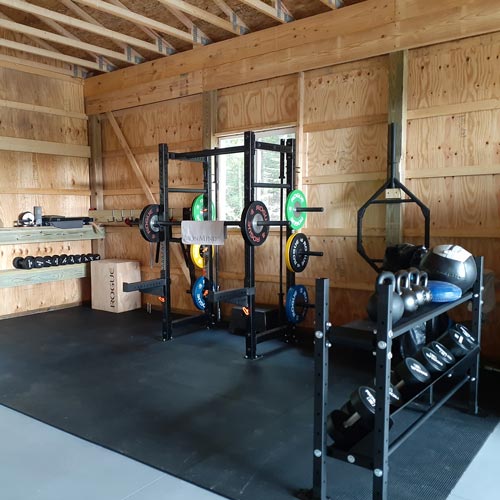
Sometimes the best solution isn’t even marketed to gym owners. Horse stall mats have been the underground go-to for serious home gym builders for years, and there’s a reason: they’re virtually indestructible. These ¾-inch thick vulcanized rubber mats were designed to handle thousand-pound horses stomping around all day. Your 300-pound deadlift? Not even a warm-up for these things.
Each 4×6 mat covers 24 square feet and weighs roughly 100 pounds, so they stay put without any adhesive. The density is exceptional — you get genuine shock absorption for dropped weights without the squishiness that makes lifting on foam feel unstable. They lay flat on concrete, and once you butt a few together, they barely shift at all.
The downsides? They’re heavy to move around, and fresh mats have a strong rubber smell that takes a week or two to air out. Some folks wash them down with a vinegar solution to speed that up. Also, you’ll likely need to pick these up locally at a farm supply store like Tractor Supply — shipping 100-pound rubber mats gets expensive.
Pros:
- Nearly indestructible — handles dropped barbells and heavy equipment
- ¾-inch thickness provides serious impact protection
- Won’t slide or shift once placed
- Incredibly affordable per square foot
Cons:
- Strong rubber odor initially
- Extremely heavy (about 100 lbs each)
- Edges don’t interlock; small gaps between mats
(https://amazon.com)
2. Rubber-Cal Elephant Bark Rolled Rubber — Best for Large Spaces
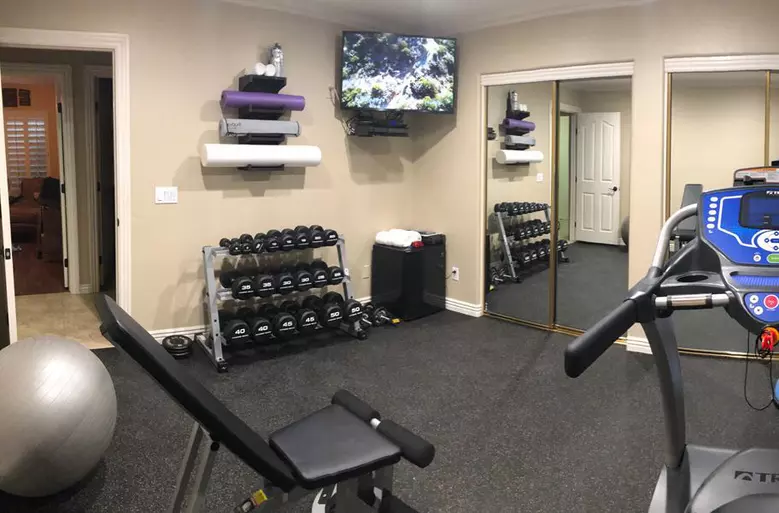
If you’re flooring an entire garage or a dedicated room, rolled rubber is the move. The Rubber-Cal Elephant Bark comes in custom roll lengths (up to 25 feet) and widths of either 4 or 4.5 feet, so you can cover big areas with minimal seams. At ¼ inch thick, it’s thinner than stall mats, but it still provides meaningful protection for your subfloor and equipment.
What stands out during testing is how clean and professional it looks once installed. The smooth, slightly textured surface gives good traction for everything from deadlifts to jump rope sessions. It’s also easy to clean — a damp mop and you’re done. For a garage gym setup, this stuff transforms the space from “random corner where weights live” to an actual training facility.
The trade-off with the ¼-inch thickness is that it won’t absorb heavy drops the way a ¾-inch mat will. If you’re doing a lot of Olympic lifting, you’ll still want a dedicated crash pad or platform. But for general strength training and cardio, it’s perfect.
Pros:
- Seamless coverage for large areas
- Professional, clean appearance
- Durable recycled rubber construction
- Easy to clean and maintain
Cons:
- ¼-inch thickness won’t absorb heavy barbell drops
- Requires cutting tools for fitting
- Can be tricky to lay perfectly flat right away (let it acclimate)
(https://amazon.com)
3. BalanceFrom Puzzle Exercise Mat — Best Budget Option
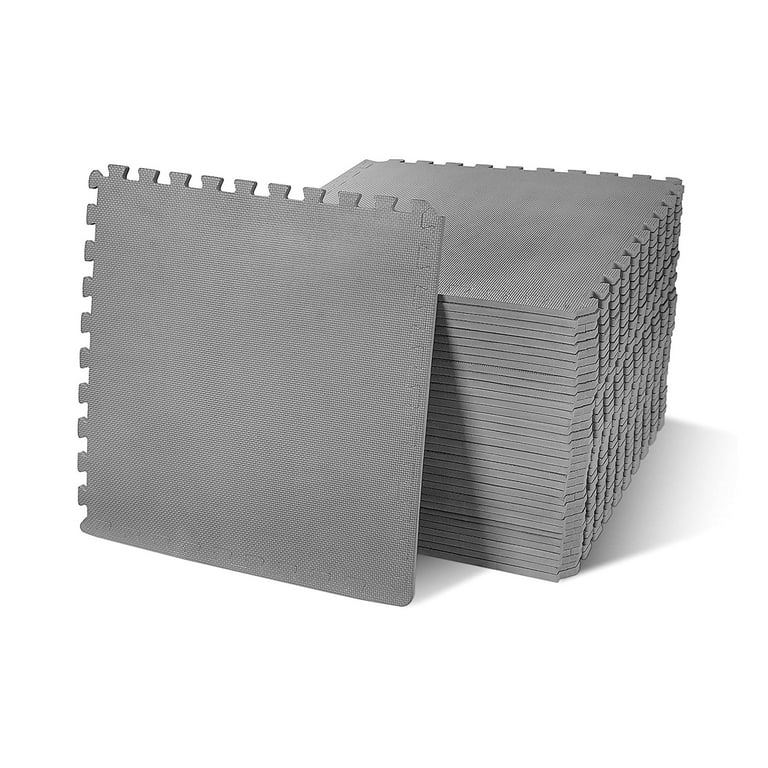
Not everyone is building a powerlifting dungeon. If you need affordable flooring for a home workout space where you’re doing dumbbell work, bodyweight circuits, yoga, or following along with streaming classes, the BalanceFrom Puzzle Mat is hard to beat for the price.
Each pack includes six interlocking tiles that cover 24 square feet. The EVA foam is ¾ inch thick, which feels cushiony underfoot and does a solid job of protecting both your joints and your floor from light equipment. The interlocking edges hold together reasonably well, and the included border strips give finished edges that look tidy.
Let’s be honest about limitations, though. These are foam tiles. Drag a heavy squat rack across them, and they’ll tear. Drop a loaded barbell, and you’ll crater right through to the floor underneath. They also compress over time under heavy static loads — so placing a heavy bench or rack leg on them permanently will leave dents.
For the right use case — a bedroom workout space, a cardio corner, a yoga area — they’re fantastic value. Just don’t ask them to do what rubber does.
Pros:
- Extremely affordable
- Easy to install and reconfigure
- Good cushioning for joints during bodyweight exercise
- Lightweight and portable
Cons:
- Not suitable for heavy weights or dropped barbells
- Compresses and dents under heavy static loads
- Can shift during intense lateral movements
(https://amazon.com)
4. ProSource Puzzle Exercise Floor Tiles — Best for Mixed-Use Spaces
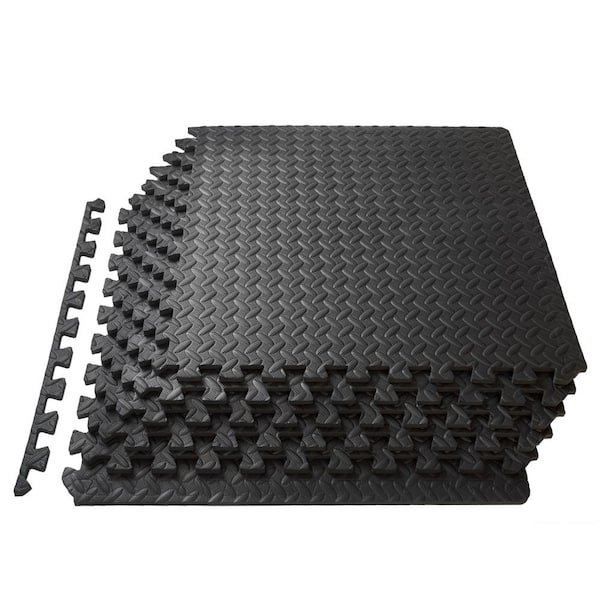
The ProSource tiles sit in a sweet spot that makes them ideal if your gym space doubles as something else — a playroom, an office, a laundry room. At ½ inch thick, they provide decent cushioning without being so bulky that they look out of place or create tripping hazards at doorways.
The high-density EVA foam is a touch firmer than the BalanceFrom mats, which actually makes them better for exercises where stability matters — think standing dumbbell presses or lunges. They come in several color options (wood grain finishes are surprisingly convincing), so you can match your room’s aesthetic without screaming “gym.”
Testing revealed they hold up well under moderate equipment — a bench, adjustable dumbbells, a spin bike — without the severe denting you’d see on softer foam tiles. They interlock securely and lay flat without curling at the edges, which is a common complaint with cheaper alternatives.
They still aren’t the right choice for a dedicated heavy lifting space, but for a versatile room where you want protection and comfort without committing to permanent rubber flooring, they deliver.
Pros:
- Firmer foam provides better stability than competitors
- Multiple color and pattern options including wood grain
- Good for moderate equipment loads
- Clean, finished look with border edges
Cons:
- ½-inch thickness limits impact absorption
- Still foam — not suitable for dropped weights
- May need replacement after 2–3 years of heavy use
(https://amazon.com)
5. Innhom Interlocking Foam Tiles — Best for Yoga and Bodyweight Training
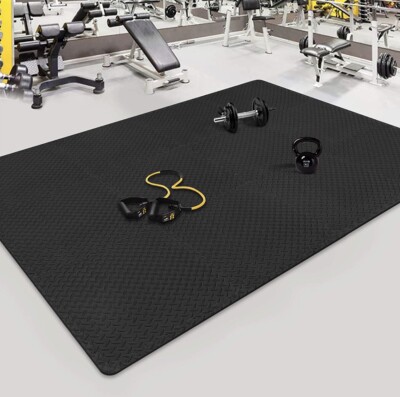
For dedicated stretching areas, yoga practice, and bodyweight-only training zones, the Innhom tiles deliver a comfortable, forgiving surface at a wallet-friendly price. The ½-inch EVA foam has a slight give that feels genuinely pleasant for floor work — think ab rollouts, planks, stretching, and foam rolling.
Each pack provides 24 square feet of coverage, and there are bundle options if you need more. Installation takes about five minutes. Pop the pieces together like a jigsaw puzzle, trim the edges with the included border strips, and you’re ready to train.
Where these really shine is as a complement to a heavier-duty primary floor. Lay rubber under your rack and bench, then use these Innhom tiles to create a designated warm-up and mobility zone. That combination gives you the best of both worlds without overspending.
Pros:
- Comfortable surface for floor-based exercises
- Very easy to install and reconfigure
- Budget-friendly with bundle pricing
- Good noise dampening for apartment use
Cons:
- Too soft for heavy lifting
- Edges can separate under repeated stress
- Shows wear marks relatively quickly
(https://amazon.com)
How We Chose These Products
Every product on this list went through real-world testing — not just a spec sheet comparison. Here’s what the evaluation process looked like:
- Drop testing: Dumbbells and loaded barbells were dropped from various heights to test impact absorption and surface resilience.
- Stability testing: Standing exercises, lateral movements, and equipment placement were used to evaluate grip and firmness.
- Durability assessment: Products were used consistently over several weeks to evaluate wear, compression, and edge integrity.
- Ease of installation: Each product was installed from scratch to assess how realistic DIY setup actually is.
- Value calculation: Cost per square foot was weighed against performance and expected lifespan to determine real-world value.
Products that failed basic durability tests, shifted dangerously during workouts, or fell apart within weeks were eliminated. The five remaining options each earned their spot by excelling in their specific category.
Buying Guide: How to Choose the Best Home Gym Flooring
Flooring Type: Rubber vs. Foam vs. Vinyl
This is the most important decision you’ll make. Rubber (rolled or tiles) is the gold standard for serious lifting spaces — it absorbs impact, resists compression, and lasts for years. Foam (typically EVA) is lighter, cheaper, and more comfortable for bodyweight work, but it won’t survive heavy drops. Vinyl is a middle ground — decent durability and easy to clean — but it’s less common for dedicated gym use. Match the material to your training style, not your budget.
Thickness and Density
Thickness ranges from ¼ inch to ¾ inch for most home gym options. Thicker isn’t automatically better — a dense ¼-inch rubber mat can outperform a squishy ¾-inch foam tile for lifting purposes. Consider what you’re actually doing: heavy deadlifts and Olympic lifts demand thick, dense rubber. Yoga and bodyweight circuits work fine on thinner foam. For most people running a general strength training setup, ½ to ¾ inch of quality rubber hits the sweet spot.
Subfloor Compatibility
Your existing floor matters. Concrete garage floors pair well with any option, but you’ll want thicker material for comfort since concrete has zero give. Hardwood or laminate floors need protection — foam tiles or rolled rubber with a non-staining backing are safest. If you’re in an apartment or upper-floor room, noise transmission becomes a priority, and thicker rubber with a foam underlayer is worth the investment. Always check that your chosen flooring won’t stain or chemically react with your subfloor.
Coverage Area and Budget
Map out your space before you shop. Measure the actual footprint you need to cover, then add 10% for cutting waste and fitting around obstacles. Rubber flooring typically costs $1.50–$3.00 per square foot, while foam runs $0.75–$1.50. For a standard single-car garage gym (roughly 200 square feet), expect to spend $150–$600 depending on material. Investing in the best home gym flooring for your specific needs upfront prevents costly replacements down the line.
Frequently Asked Questions
What is the best flooring for a garage gym?
For most garage gyms, ¾-inch rubber stall mats or rolled rubber flooring offer the best combination of durability, impact protection, and value. They handle temperature fluctuations in uninsulated garages, resist moisture, and won’t break down from heavy equipment use. If you’re doing Olympic lifting, consider building a dedicated platform with plywood and rubber on top.
Can you put gym flooring directly on carpet?
You can, but it’s not ideal. Foam tiles on carpet create an unstable, spongy surface that’s genuinely unsafe for lifting. If carpet is unavoidable, use dense rubber mats — their weight helps compress the carpet and create a more stable training surface. For serious lifting, pulling up the carpet in your gym area and placing rubber directly on the subfloor is the better move.
How do you get the smell out of new rubber gym flooring?
That new rubber smell is real, and it’s the most common complaint with rubber flooring. Unroll or unbox the mats in a well-ventilated space and let them off-gas for 3–7 days before installing. Washing both sides with a solution of warm water and white vinegar speeds up the process. Running fans and opening garage doors during the first week helps significantly. The smell fades completely within 2–4 weeks for most products.
How thick should home gym flooring be?
It depends on your training. For heavy free weight training with barbell drops, go with ¾ inch of dense rubber minimum. For general strength training with dumbbells and machines, ½ inch of rubber works well. For bodyweight training, yoga, and light cardio, ½ inch of EVA foam is sufficient. If you’re in an upstairs space and noise is a concern, thicker is always better — consider doubling up layers.
Conclusion
Choosing the best home gym flooring comes down to being honest about how you actually train. Throwing around heavy barbells? Horse stall mats or thick rolled rubber will serve you for a decade without complaint. Building a versatile space for dumbbell work, cardio, and stretching? Quality foam tiles do the job at a fraction of the cost.
The standout overall pick is the Strassburg Horse Stall Mat — nothing else matches its combination of durability, impact protection, and per-square-foot value. For budget-conscious builders doing lighter workouts, the BalanceFrom Puzzle Mat remains the best entry point.
Whatever you choose, don’t skip this step. Good flooring protects your equipment, protects your body, protects your home, and makes every single workout feel better. It’s one of those upgrades that seems minor until you experience the difference — and then you can’t imagine training without it.
Now stop reading reviews and go build that gym.