Affiliate Disclosure: This article contains affiliate links. If you click through and make a purchase, we may earn a small commission at no extra cost to you. This helps support our independent testing and keeps the reviews honest and free. We only recommend products we’d genuinely use ourselves.
Introduction
Let’s be real — getting to the gym every single day is a fantasy for most people. Between work, kids, weather, and the sheer annoyance of waiting for someone to finish their set, working out at home just makes more sense for a lot of us. And when it comes to home cardio, a stationary bike is one of the smartest investments you can make. Low impact on your joints, surprisingly effective for burning calories, and small enough that it won’t swallow your entire living room.
But here’s the problem: there are hundreds of options out there, and the gap between a great bike and an expensive clothes hanger is wider than you’d think. After spending weeks testing, comparing specs, reading thousands of user reviews, and actually riding these things until our legs burned, we narrowed it down to the five best stationary bikes for home use right now. Whether you want a Peloton-killer or a simple, budget-friendly spinner, there’s something here for you.
Quick Comparison Table
| Bike | Best For | Resistance Type | Max Weight Capacity | Screen | Price Range |
|---|---|---|---|---|---|
| Schwinn IC4 | Best Overall | Magnetic, 100 levels | 330 lbs | No (tablet holder) | $$ |
| Peloton Bike | Best Premium Experience | Magnetic, 100 levels | 297 lbs | 21.5″ HD Touchscreen | $$$$ |
| YOSUDA Indoor Cycling Bike | Best Budget | Felt pad, adjustable | 270 lbs | No (tablet holder) | $ |
| Bowflex VeloCore | Most Innovative | Magnetic, 100 levels | 325 lbs | 16″ or 22″ Touchscreen | $$$$ |
| Sunny Health & Fitness SF-B1805 | Best Magnetic Under $500 | Magnetic, adjustable | 300 lbs | No (tablet holder) | $$ |
Top 5 Product Reviews
1. Schwinn IC4 — Best Overall Stationary Bike for Home Use

If you want one recommendation and don’t feel like reading the rest of this article, here it is: the Schwinn IC4 hits the sweet spot of quality, features, and price better than almost anything else on the market. It’s genuinely hard to find a flaw that isn’t nitpicking.
The IC4 uses a magnetic resistance system with 100 micro-adjustable levels, which means buttery-smooth pedaling with virtually zero noise. You could ride this thing at 5 AM while your partner sleeps in the next room — no exaggeration. The 40-pound flywheel delivers a road-like feel that’s satisfying for beginners and experienced cyclists alike.
There’s no built-in screen, but the tablet holder is sturdy, and the bike connects via Bluetooth to apps like Zwift, Peloton (yes, you can use the Peloton app without buying their bike), and Explore the World. The seat is decent out of the box, though swapping it for a more cushioned option is easy since it uses a standard mount. Build quality feels solid — this isn’t a wobbly budget bike pretending to be premium.
Pros:
- 100 levels of smooth, quiet magnetic resistance
- Bluetooth connectivity for third-party apps
- Dual-link pedals (cage and SPD clip compatible)
- USB charging port and dual water bottle holders
- Excellent build quality for the price
Cons:
- No built-in screen (need your own tablet/phone)
- Seat may need upgrading for longer rides
- Heart rate armband included but can be inconsistent
2. Peloton Bike — Best Premium Connected Experience
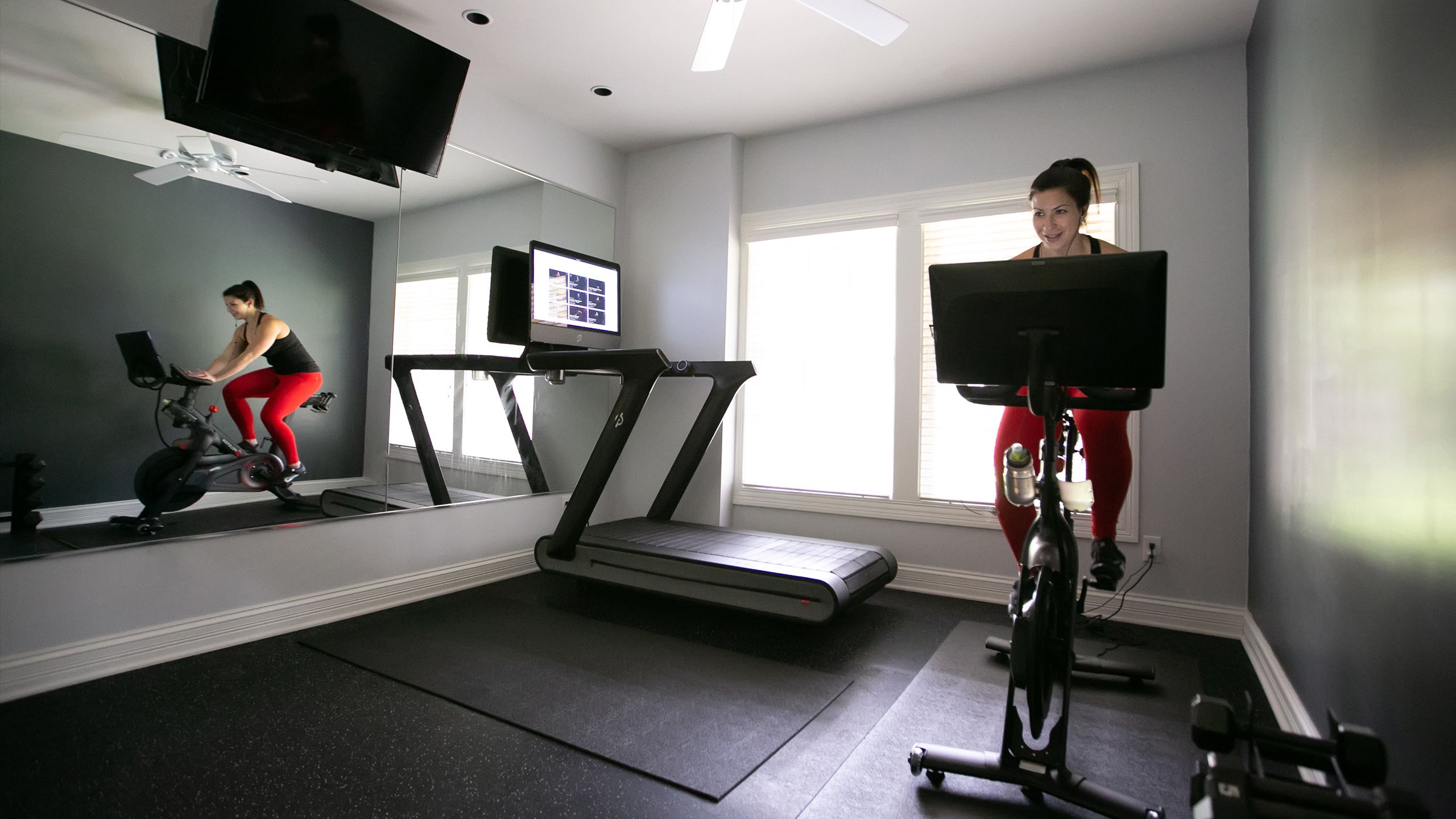
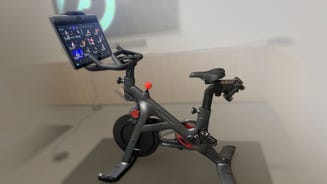
Look, the Peloton is expensive. Nobody’s arguing otherwise. But there’s a reason it basically created an entire category of connected fitness — the experience is that good.
The 21.5-inch HD touchscreen is gorgeous, the live and on-demand classes are world-class, and the community aspect (leaderboards, tags, shoutouts) genuinely makes you want to show up day after day. The hardware itself is refined: the magnetic resistance is smooth, the bike feels rock-solid, and the overall design is sleek enough that it doesn’t look like gym equipment dumped in your living room.
The catch? You’re paying a premium upfront and committing to a $44/month subscription to unlock the full experience. Without it, that beautiful screen becomes a very expensive paperweight. The weight capacity is also slightly lower than some competitors at 297 lbs. But if you’re the type of person who thrives on structure, instructor energy, and accountability, there’s still nothing that beats Peloton’s ecosystem.
Pros:
- Immersive 21.5″ HD touchscreen
- Thousands of live and on-demand classes
- Exceptional build quality and sleek design
- Huge, motivating community and leaderboard system
- Near-silent magnetic resistance
Cons:
- High upfront cost
- Requires $44/month subscription for full features
- 297 lb weight capacity is lower than some competitors
- SPD-SL cleats only (no cage pedals without swapping)
3. YOSUDA Indoor Cycling Bike — Best Budget Pick

If the budget is tight but you still want a legitimate cycling workout at home, the YOSUDA is the bike that keeps showing up in “best budget” lists for good reason — it actually delivers.
For under $300 (and frequently on sale for less), you get a 35-pound flywheel, an adjustable felt-pad resistance system, and a surprisingly stable frame. It’s not going to feel like a $1,500 bike, and nobody’s pretending it will. The resistance knob is infinitely adjustable but not numbered, so you’re going by feel rather than precise levels. The LCD monitor tracks basic metrics like time, speed, distance, and calories.
Where the YOSUDA shines is simplicity. It assembles in about 30 minutes, it’s quiet enough for apartment living, and it does the fundamental job of giving you a solid sweat session without draining your bank account. The seat is the most common complaint — it’s firm — but a $20 gel cover solves that instantly. For anyone testing the waters of home cycling or looking for a no-frills workhorse, this is the best stationary bike for home use under $300, period.
Pros:
- Incredibly affordable
- Sturdy 35-lb flywheel for smooth riding
- Easy assembly (under 30 minutes)
- Tablet holder included
- Transport wheels for easy moving
Cons:
- Felt-pad resistance wears over time and needs replacement
- No numbered resistance levels
- Basic LCD monitor (no Bluetooth)
- Seat comfort is below average out of the box
4. Bowflex VeloCore — Most Innovative Design
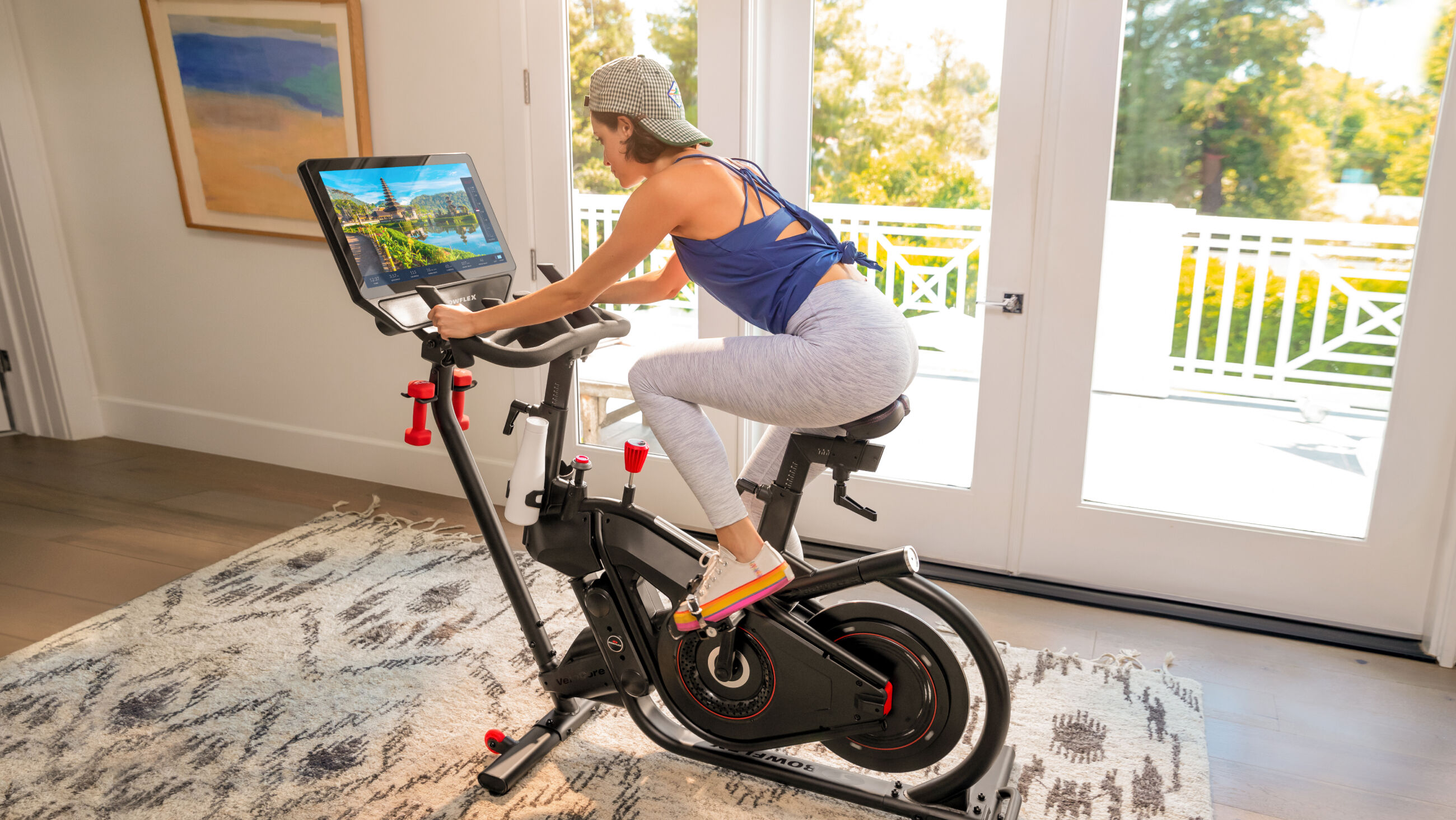
The Bowflex VeloCore does something no other bike on this list does: it leans. Seriously. The bike has a “Lean Mode” that lets the frame tilt side to side, engaging your core and obliques while you ride. It sounds gimmicky until you actually try it — then it becomes the feature you didn’t know you needed.
In “Stationary Mode,” it performs like a high-end traditional spin bike with 100 levels of magnetic resistance and a smooth, heavy flywheel feel. Switch to Lean Mode, and suddenly you’re working muscles that a standard stationary bike completely ignores. It’s available with either a 16-inch or 22-inch touchscreen, both of which run the JRNY app (subscription required for full access, though a free trial is included).
The build quality is excellent, and the adjustability is top-tier — seat height, seat depth, handlebar height, and handlebar depth are all independently adjustable. The biggest downside is the price tag, which puts it in direct competition with Peloton. But if you value versatility and want a workout that goes beyond just pedaling, the VeloCore offers something genuinely unique.
Pros:
- Unique Lean Mode engages core and obliques
- 100 levels of smooth magnetic resistance
- Available in 16″ or 22″ touchscreen models
- Excellent adjustability for different body types
- Solid, premium build quality
Cons:
- Expensive, especially the 22″ model
- JRNY subscription required for full content ($149/year or $24.99/month)
- Lean Mode takes some getting used to
- Heavier and larger footprint than most competitors
5. Sunny Health & Fitness SF-B1805 — Best Magnetic Bike Under $500

Sunny Health & Fitness has quietly become one of the most reliable names in affordable home gym equipment, and the SF-B1805 is a perfect example of why. It gives you magnetic resistance — a meaningful upgrade over felt-pad systems — at a price point that won’t make you wince.
The magnetic resistance system means smoother operation, less noise, and zero maintenance on brake pads. The 44-pound chrome flywheel provides a heavy, road-like momentum that feels significantly more premium than the price suggests. There’s a simple LCD console for basic metrics, a tablet holder, and adjustable handlebars and seat with four-way adjustability.
It’s not connected. There’s no app integration, no Bluetooth, no fancy screen. And honestly? For a lot of people, that’s perfectly fine. Sometimes you just want to hop on, throw on a Netflix show, and pedal for 45 minutes without worrying about leaderboards or subscription fees. The SF-B1805 does that job exceptionally well, making it one of the best stationary bikes for home use in the mid-range category.
Pros:
- Magnetic resistance = quiet, smooth, low maintenance
- Heavy 44-lb flywheel for premium ride feel
- 4-way adjustable seat and handlebars
- Solid 300 lb weight capacity
- No subscription fees or ongoing costs
Cons:
- No Bluetooth or app connectivity
- Basic LCD monitor only
- Resistance levels aren’t numbered
- Seat is firm (common in this price range)
How We Chose These Products
Picking the best stationary bike for home use isn’t as simple as sorting by star ratings on Amazon. Here’s what actually went into the selection process:
- Ride Quality: Above everything else, how does the bike feel when you’re pedaling? Smooth, consistent resistance matters more than flashy features.
- Build Quality & Durability: We looked for solid frames, quality components, and bikes that won’t start creaking after three months of regular use.
- Noise Level: Home bikes need to be quiet. If it sounds like a washing machine on spin cycle, it didn’t make the list.
- Adjustability: Bodies come in all sizes. A good bike needs to accommodate a wide range of heights and proportions comfortably.
- Value for Money: Every price range should have a winner. We didn’t just test expensive bikes — we made sure every dollar spent translates to a better experience.
- User Feedback: Thousands of verified user reviews were analyzed to spot recurring issues (or recurring praise) that short-term testing might miss.
Buying Guide: What to Look for in a Home Stationary Bike
Resistance Type: Magnetic vs. Friction
This is the single most important decision you’ll make. Friction (felt-pad) resistance is cheaper and found on budget bikes. It works fine, but the pads wear down over time, can be noisier, and the feel isn’t as smooth. Magnetic resistance uses magnets that never touch the flywheel, resulting in whisper-quiet operation, zero maintenance, and a smoother ride. If your budget allows, go magnetic every time.
Flywheel Weight and Ride Feel
The flywheel is the heavy wheel at the front (or rear) that creates momentum. Heavier flywheels (generally 30 lbs and above) produce a smoother, more consistent pedal stroke that mimics the feel of riding a real road bike. Lighter flywheels can feel choppy, especially at lower speeds. For most home users, a flywheel between 35–50 pounds hits the sweet spot.
Connectivity and Smart Features
Do you need a built-in screen and live classes, or are you happy propping up a tablet and streaming your own content? Be honest with yourself here — a $44/month subscription adds up to over $500 a year. If you’re self-motivated and don’t need instructor-led classes, you can save a fortune by choosing a simpler bike and using free YouTube workouts or a standalone app. On the other hand, if accountability and community keep you consistent, a connected bike might be the difference between actually using it and letting it collect dust.
Size, Weight Capacity, and Adjustability
Measure your space before buying. Most stationary bikes need a footprint of roughly 4 feet by 2 feet, but some (like the Bowflex VeloCore) are larger. Check the maximum weight capacity — it should comfortably exceed the rider’s weight for safety and longevity. And pay attention to adjustability: a bike with four-way seat adjustment (up/down and forward/back) plus adjustable handlebars will fit a much wider range of body types than a bike with only height adjustment.
Frequently Asked Questions
How long should you ride a stationary bike to see results?
Most fitness guidelines recommend at least 150 minutes of moderate-intensity cardio per week. That breaks down to about 30 minutes, five days a week. Consistency matters far more than intensity — three 30-minute rides per week will deliver better results than one brutal 90-minute session followed by a week of nothing.
Is a stationary bike better than a treadmill for home use?
Neither is objectively “better” — it depends on your goals and body. Stationary bikes are significantly lower impact, making them easier on knees, hips, and ankles. They’re also quieter and take up less space. Treadmills burn slightly more calories per hour on average but carry a higher injury risk. For most home users, especially those with joint concerns, a stationary bike is the safer and more practical choice.
Do you need cycling shoes for a stationary bike?
Not necessarily. Many bikes (like the Schwinn IC4 and YOSUDA) come with dual-sided pedals — one side has a toe cage for regular sneakers, and the other has a clip for cycling shoes. Clipless cycling shoes do improve power transfer and pedaling efficiency, but they’re absolutely not required, especially for casual riders. Start with sneakers and upgrade later if you want.
How much should you spend on a stationary bike?
You can get a perfectly functional bike for under $300 (like the YOSUDA), a genuinely excellent one for $500–$900 (like the Schwinn IC4 or Sunny SF-B1805), and a premium connected experience for $1,200+ (Peloton, Bowflex). The “right” amount depends on how often you’ll ride and how important features like screens and classes are to you. A good rule of thumb: if you’ll use it at least three times a week, spending $500–$800 is a solid investment that pays for itself within months compared to a gym membership.
Conclusion
Finding the best stationary bike for home use comes down to matching the right bike to your budget, your space, and how you actually like to work out. The Schwinn IC4 remains our top overall pick for its unbeatable combination of ride quality, features, and price. The Peloton is still king if you want the full connected class experience and don’t mind the subscription. And the YOSUDA proves you don’t need to spend a fortune to get a legit workout at home.
Whatever you choose, the best bike is the one you’ll actually ride. Don’t overthink it — pick the option that fits your life, clip in (or lace up), and start pedaling. Your future self will thank you.
Leave a Reply