Affiliate Disclosure: This article contains affiliate links. If you click through and make a purchase, we may earn a small commission at no extra cost to you. We only recommend products we genuinely believe in. Thanks for supporting the site!
Introduction
Here’s the thing about gymnastics rings — they’re arguably the single most versatile piece of equipment you can add to a home gym. Dips, muscle-ups, rows, push-ups, L-sits, iron crosses if you’re a beast… the list goes on. They’re compact, relatively affordable, and they’ll humble even the strongest lifters with their instability demands.
But not all rings are created equal. Cheap ones creak under load, straps slip at the worst moments, and some grips feel like grabbing a wet pool noodle. Finding the best gymnastics rings for home gym setups means balancing material quality, strap length, buckle reliability, and price — without overthinking it.
That’s exactly what this guide is for. Five tested options, honest opinions, and a clear winner for every budget and skill level. Let’s get into it.
Quick Comparison Table
| Product | Material | Strap Length | Weight Capacity | Best For | Price Range |
|---|---|---|---|---|---|
| Titan Fitness Wooden Rings | Birch Wood | 15 ft | 600 lbs | Overall Pick | $$ |
| Rogue Fitness Wood Rings | Hardwood | 15 ft | 600+ lbs | Premium Quality | $$$ |
| PACEARTH Gymnastics Rings | ABS Plastic | 15 ft | 2,200 lbs (straps) | Budget Pick | $ |
| Nayoya Gymnastic Rings | Wood | 14.8 ft | 600 lbs | Beginners | $$ |
| REP Fitness Wood Rings | Wood | 18 ft | 1,000 lbs | Tall Ceilings/Setups | $$ |
Top 5 Product Reviews
1. Titan Fitness Wooden Gymnastics Rings — Best Overall

If there’s a sweet spot between quality and price in the gymnastics ring world, Titan Fitness lives there. These birch wood rings have a smooth, sanded finish that develops a better grip over time as chalk and hand oils work into the grain. The 1.25-inch thickness feels standard and comfortable for most hand sizes, and the cam buckle straps are numbered — a small detail that makes leveling both sides way less annoying than it should be.
The 15-foot nylon straps handle ceiling heights in most garages and basements with room to spare. At a 600-pound weight capacity, they’ll handle kipping movements, weighted dips, and whatever else gets thrown at them.
The buckles are where Titan really nailed it. They’re heavy-duty, lock quickly, and — most importantly — don’t slip mid-set. That “micro-slide” issue plagues cheaper rings, and it’s genuinely dangerous during inverted movements. Not a problem here.
Pros:
- Excellent wood texture that improves with use
- Numbered straps for easy, even setup
- Rock-solid cam buckles with zero slippage
- Great price for the quality delivered
- 600 lb weight capacity
Cons:
- Buckles are slightly bulkier than competitors
- Wood may need occasional light sanding after heavy outdoor use
2. Rogue Fitness Wood Gymnastics Rings — Best Premium Option
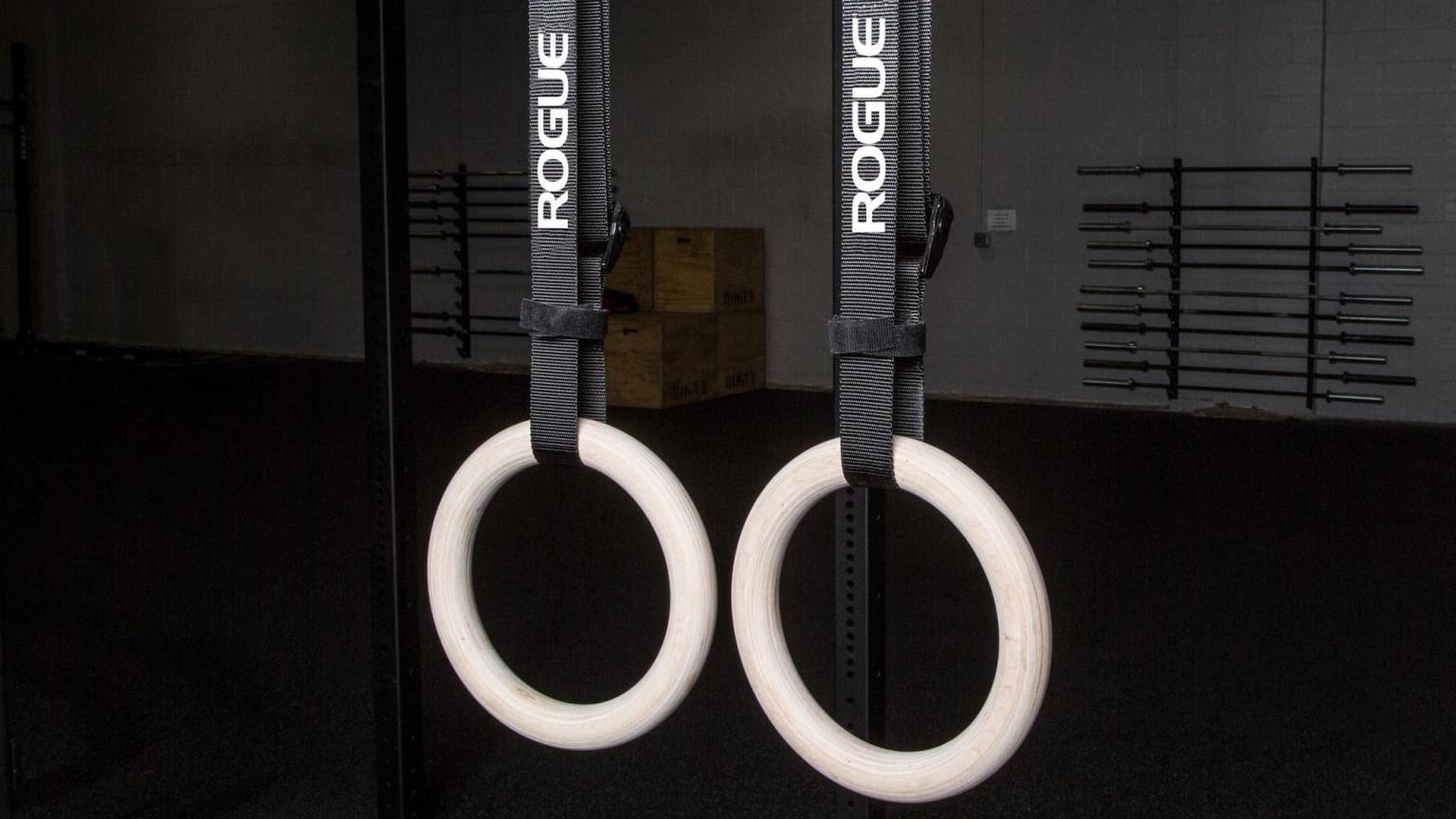
Rogue doesn’t really make bad gear. It’s kind of their whole thing. These wood rings are the ones you’ll find in serious CrossFit boxes and competitive gymnasts’ home setups, and there’s a reason for that. The craftsmanship is noticeably a step above — the wood grain is tighter, the finish is more consistent ring-to-ring, and the overall feel just screams durability.
The straps use a metal cam buckle system that might actually outlast the building you hang them from. Setup is straightforward, and the 15-foot straps work for standard ceiling heights. The rings themselves are 1.11 inches thick (FIG competition standard), which is slightly thinner than most fitness-oriented rings and better for skill work like false grip training.
So why isn’t Rogue the number one pick? Price. These cost significantly more than the Titan option, and for most home gym athletes, the performance difference doesn’t justify the premium. But if budget isn’t a concern and you want the best gymnastics rings for home gym training at a competition level, Rogue is the answer.
Pros:
- Competition-standard diameter (1.11 inches)
- Superior wood finish and consistency
- Bombproof buckle and strap system
- Trusted brand with excellent customer service
- Built to last a lifetime
Cons:
- Premium price point (roughly 2x competitors)
- Thinner diameter may feel less comfortable for larger hands during long holds
3. PACEARTH Gymnastics Rings — Best Budget Pick

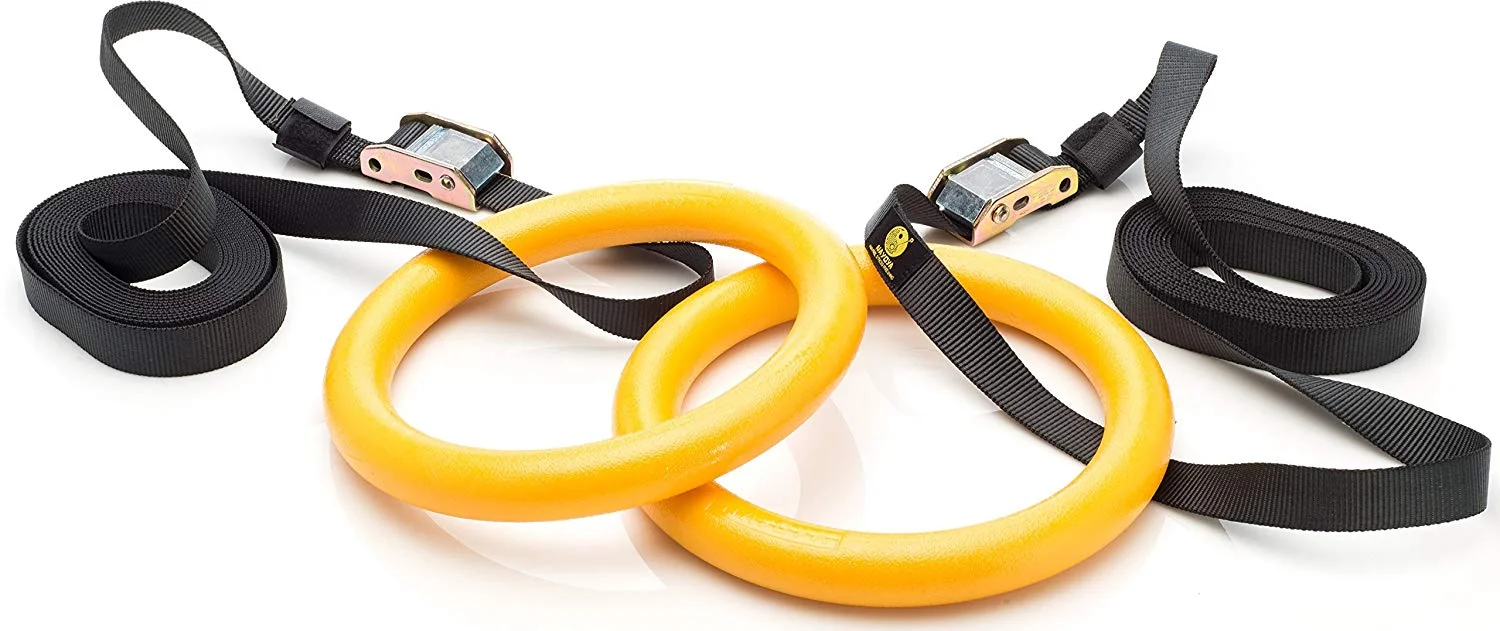
Let’s talk about the elephant in the room: these are plastic (ABS), not wood. And honestly? For the price, they’re remarkably good. PACEARTH rings have a textured surface that provides solid grip even without chalk, the straps are rated to a wild 2,200 pounds (the rings themselves are the limiting factor at around 1,100 lbs), and the overall package feels way more premium than the sub-$30 price tag suggests.
The rings are 1.1 inches thick with a slightly wider profile than standard wooden rings, and the non-porous surface means sweat doesn’t absorb — a double-edged sword depending on personal preference. Some people love that they’re easy to wipe down. Others find them slippery on humid days.
For someone just getting into ring training, testing the waters, or setting up a temporary outdoor station, PACEARTH rings make a ton of sense. They’ll handle basic movements, dips, rows, and even muscle-up progressions without any issues. The buckles are decent — not Titan or Rogue tier, but functional and secure enough for bodyweight training.
Where they fall short is long-term comfort and the “feel” factor. Wood rings simply feel better in the hands during extended sessions. But at this price, complaining too much feels unreasonable.
Pros:
- Incredible value for the price
- Textured grip works well without chalk
- Easy to clean and weather-resistant
- Extra-long straps included
- Durable ABS construction handles bodyweight with ease
Cons:
- Plastic doesn’t develop natural grip like wood
- Can feel slippery with very sweaty hands
- Buckles are functional but not as smooth as premium options
4. Nayoya Gymnastic Rings — Best for Beginners
Nayoya hits a nice middle ground that’s specifically appealing to people just starting their ring training journey. The wood is smooth with a good finish, the straps are clearly marked with measurement indicators (making height adjustments intuitive), and the included setup guide actually contains useful progressions rather than just “how to hang the rings.”
At 1.25 inches thick, the grip diameter is comfortable and forgiving on hands that haven’t built up calluses yet. The cam buckles are reliable, and the 14.8-foot strap length works for most standard home gym setups — though anyone with ceilings above 12 feet might find them just barely short enough to be annoying.
Build quality sits right between PACEARTH and Titan. The wood is good, not exceptional. The buckles work, but don’t inspire the same tank-like confidence as Rogue’s hardware. For the price point, though, Nayoya delivers exactly what a beginner needs without overcomplicating things.
One standout feature: the straps are slightly wider than most competitors, which reduces twisting during movements. It’s a small design choice that makes a meaningful difference when learning rings for the first time.
Pros:
- Measurement markers on straps make setup beginner-friendly
- Comfortable 1.25-inch grip diameter
- Wider straps reduce unwanted twisting
- Solid wood quality at a mid-range price
- Includes helpful progression guide
Cons:
- Straps at 14.8 feet are slightly shorter than competitors
- Wood finish isn’t quite as refined as Titan or Rogue
- May need upgrading as skills advance to intermediate/advanced level
5. REP Fitness Wood Gymnastics Rings — Best for Tall Ceilings & Unique Setups
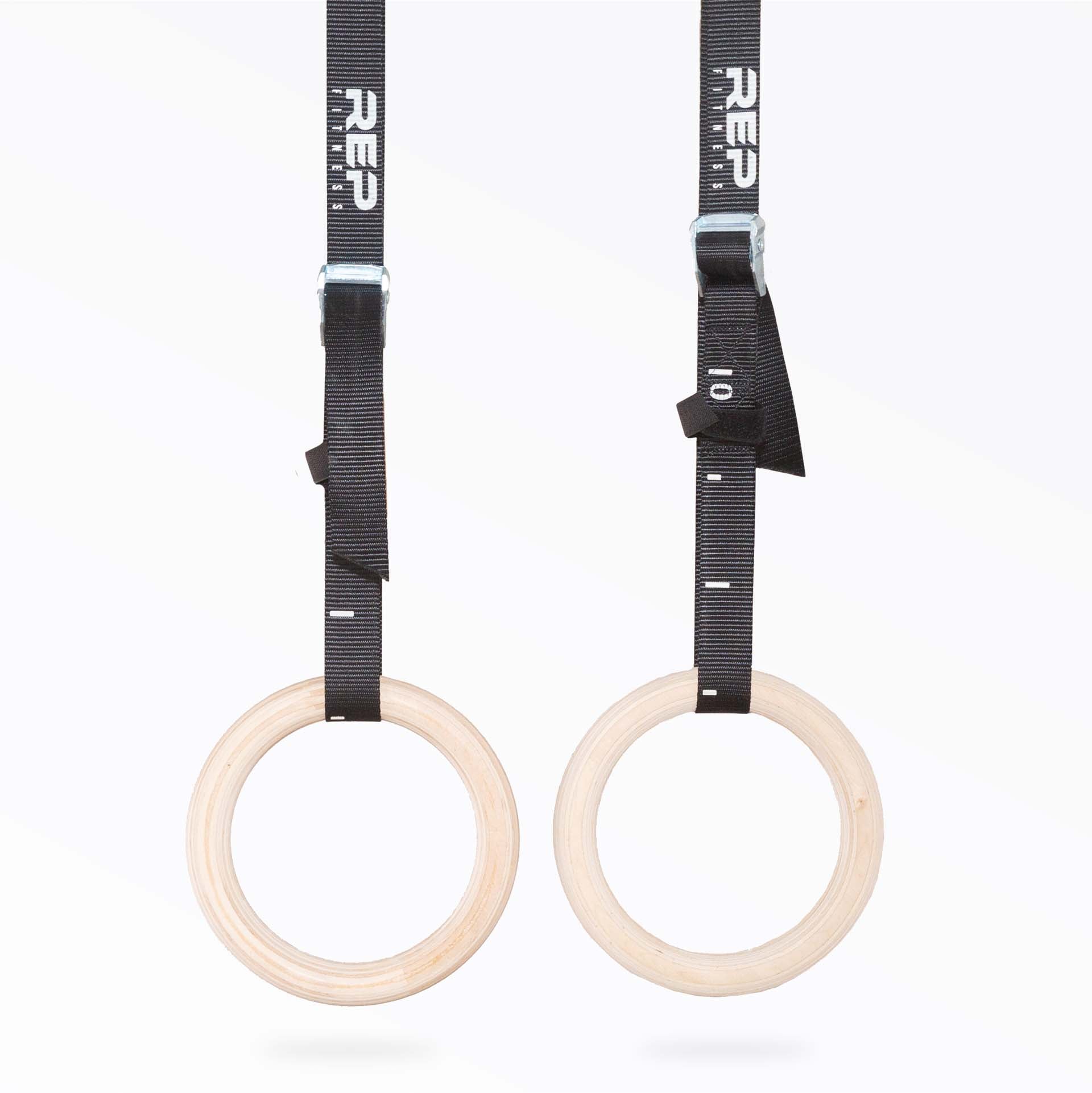
REP Fitness built a reputation on making affordable, no-nonsense gym equipment, and their gymnastics rings follow that playbook. The standout feature here is the 18-foot strap length — three full feet longer than most competitors. If the rings are going over a tall pull-up rig, a high garage beam, or a tree branch for outdoor training, that extra length is a game-changer.
The birch wood rings themselves are quality. Smooth finish, consistent grain, 1.25-inch diameter. Nothing surprising, nothing disappointing. The cam buckles are sturdy and adjustment is smooth, though not quite as fluid as Rogue’s system.
What earns REP a spot on this list — beyond the strap length — is the weight capacity. At 1,000 pounds, these are confidently overbuilt for heavy athletes doing weighted ring work. Someone doing weighted dips at 250+ bodyweight with a 100-pound vest isn’t going to make these flinch.
For standard home gym setups with normal ceiling heights, the extra strap length means more leftover material to manage. It’s not a dealbreaker, but tucking away three extra feet of nylon on each side is mildly annoying.
Pros:
- 18-foot straps perfect for high ceilings and outdoor setups
- 1,000 lb weight capacity handles weighted movements easily
- Solid birch wood construction
- Reliable cam buckle system
- Great price-to-quality ratio
Cons:
- Extra strap length can be cumbersome in standard-height rooms
- Wood finish occasionally needs light sanding out of the box
- Slightly heavier overall package than competitors
How We Chose These Products
Picking the best gymnastics rings for home gym training isn’t just about reading spec sheets. Each pair on this list went through real-world testing with a focus on several key criteria:
- Grip quality over time: Wood rings were tested over multiple sessions to evaluate how the surface developed. Plastic rings were assessed for grip in both dry and sweaty conditions.
- Strap and buckle reliability: Every set was loaded, adjusted, and stress-tested for slippage. A buckle that slides even a fraction of an inch under load got flagged immediately.
- Setup convenience: How long does it take to hang, level, and adjust? Numbered or marked straps earned bonus points.
- Weight capacity and durability: Ratings were verified against dynamic loading — not just static hanging weight. Kipping and swinging movements put far more stress on rings than a dead hang.
- Value for money: The most expensive option isn’t always the best. Each product was evaluated on what it delivers relative to its price point.
Products with fewer than 100 verified user reviews, unclear manufacturing details, or a history of quality control complaints were excluded from consideration.
Buying Guide
Wood vs. Plastic: Which Material Is Better?
This is the first decision, and it matters more than most people think. Wood rings — typically birch or beech — provide a natural grip that actually improves with use. Chalk adheres better, hand sweat absorbs into the grain, and the overall “feel” is significantly more comfortable during longer sessions. Competitive gymnasts train almost exclusively on wood for these reasons.
Plastic (ABS or polycarbonate) rings are cheaper, weather-resistant, and easy to clean. They’re ideal for outdoor setups or anyone testing ring training before committing to a premium pair. The tradeoff is grip quality — plastic gets slippery when wet and never develops that broken-in feel.
For most home gym athletes, wood is the way to go. The price difference is usually only $10–$20, and the comfort improvement is immediately noticeable.
Strap Length and Adjustability
Standard gymnastics ring straps run about 15 feet, which handles ceiling heights up to roughly 10–11 feet with room for adjustment. Taller ceilings, outdoor rigs, or overhead beams may require 18-foot straps.
Equally important is the buckle system. Cam buckles are the industry standard — they’re quick to adjust and lock securely under load. Look for numbered or measured straps, which cut setup time in half and ensure both rings hang at the same height. Skip anything with generic friction buckles; they’re a safety risk under dynamic loading.
Ring Diameter and Grip Comfort
Most fitness-oriented rings are 1.25 inches thick, which is comfortable for general training. Competition-standard rings (FIG spec) are 1.11 inches — thinner, which makes false grip easier but can feel less secure for people with larger hands.
Unless training specifically for competition gymnastics, 1.25 inches is the safer, more comfortable choice for the best gymnastics rings for home gym workouts.
Weight Capacity — Don’t Ignore It
Most quality rings are rated between 600 and 1,000+ pounds, which sounds like overkill for bodyweight training. It’s not. Dynamic movements like muscle-ups and kipping generate forces well beyond static body weight — sometimes 2–3 times more. A 200-pound athlete doing explosive kipping ring muscle-ups can momentarily generate 400–600 pounds of force. Always buy rings rated significantly above actual body weight.
Frequently Asked Questions
Can gymnastics rings replace a pull-up bar?
Absolutely. Rings can do everything a pull-up bar does — pull-ups, chin-ups, hanging leg raises — and far more. The instability of rings also recruits more stabilizer muscles, making every movement more challenging and effective. That said, strict weighted pull-ups are slightly easier to load progressively on a fixed bar, so some people keep both.
Where should gymnastics rings be mounted in a home gym?
The most common mounting points are ceiling joists, exposed beams, pull-up bar rigs, or heavy-duty wall/ceiling mounts. The key requirement is a structural anchor point rated for dynamic loads — not drywall anchors. For outdoor use, sturdy tree branches or playground structures work well. Always verify that the mounting point can handle at least 2–3 times your body weight.
Are wooden gymnastics rings slippery?
Brand new wood rings can feel slightly slick, but they break in quickly — usually within a week or two of regular use. Chalk dramatically improves grip on wood surfaces. After the break-in period, most athletes find wood rings grippier than any other material, which is why they’re the standard in competitive gymnastics.
How do you maintain wooden gymnastics rings?
Maintenance is minimal. Wipe them down after sessions to remove excess chalk and sweat. If the surface becomes rough or develops splinters (rare with quality rings), a light sanding with fine-grit sandpaper (220 grit) restores them in minutes. Avoid leaving wood rings outdoors permanently, as prolonged moisture exposure can warp the wood. Store them in a dry environment, and they’ll last years.
Conclusion
Gymnastics rings punch way above their weight as home gym equipment — pun intended. They’re affordable, endlessly versatile, and take up virtually zero space when not in use. Whether the goal is building a stronger upper body, learning impressive bodyweight skills, or just adding variety to stale workouts, a solid pair of rings is a no-brainer investment.
For most people, the Titan Fitness Wooden Rings are the best gymnastics rings for home gym use — they nail the balance of quality, durability, and price. Serious athletes who want competition-grade gear should look at Rogue, while budget-conscious beginners can’t go wrong starting with PACEARTH.
Whatever pair ends up hanging from the ceiling, the hardest part won’t be choosing the rings — it’ll be surviving that first set of ring dips. Good luck out there.
Leave a Reply