Affiliate Disclosure: This article contains affiliate links. If you click through and make a purchase, we may earn a small commission at no extra cost to you. This helps support our independent testing and keeps the reviews honest. We only recommend equipment we’d genuinely use ourselves.
Introduction
Let’s be real — nobody wants a garage full of mismatched equipment that collects dust and guilt in equal measure. The appeal of a single station that handles chest, back, legs, shoulders, and everything in between is massive. But finding the best all in one home gym machine isn’t as simple as picking the one with the most exercises listed on the box.
After spending hundreds of hours testing home gym systems — adjusting cables, swapping attachments, maxing out weight stacks, and occasionally cursing at poorly written assembly instructions — narrowing the field down to five machines that genuinely earn a recommendation became possible. Whether you’ve got a $500 budget or a $3,000 one, whether your training space is a spare bedroom or a two-car garage, there’s something here that fits.
Let’s get into it.
Quick Comparison Table
| Rank | Product | Max Resistance | # of Exercises | Footprint | Best For | Price Range |
|---|---|---|---|---|---|---|
| 1 | Bowflex Revolution | 300 lbs (upgradable) | 100+ | 9′ × 6.5′ | Overall best | $$$$ |
| 2 | Force USA G3 All-In-One Trainer | 289 lbs (per stack) | 150+ | 7.2′ × 4.6′ | Serious lifters | $$$$ |
| 3 | Bowflex Xtreme 2 SE | 210 lbs (upgradable) | 70+ | 7.8′ × 6.5′ | Mid-range value | $$$ |
| 4 | Marcy Smith Cage MWM-4008 | 300 lbs | 100+ | 8′ × 7′ | Budget powerhouse | $$ |
| 5 | Total Gym XLS | 400 lbs (body weight) | 80+ | 8′ × 4′ (folds) | Small spaces & beginners | $$ |
Top 5 Product Reviews
1. Bowflex Revolution — Best Overall All in One Home Gym Machine
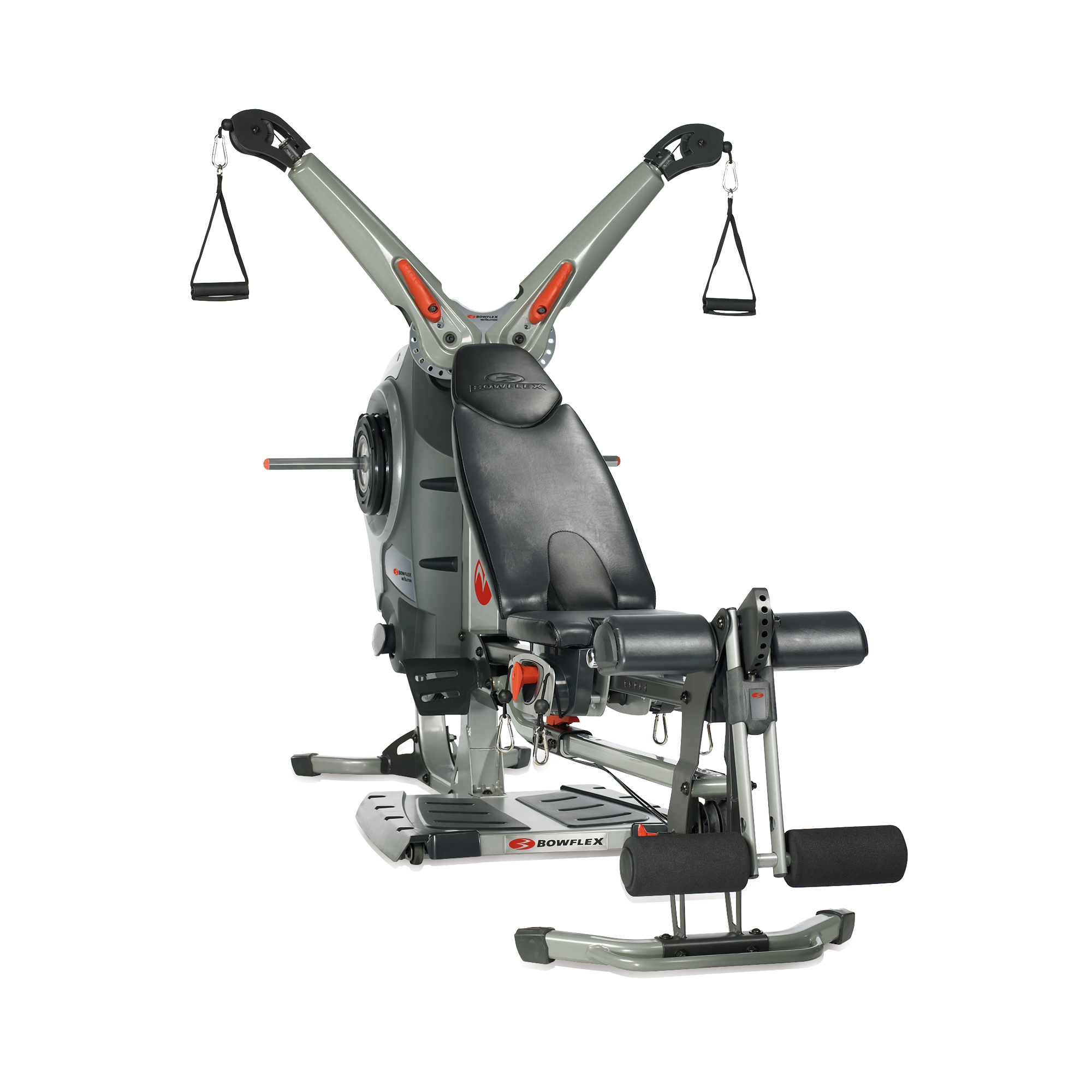
The Bowflex Revolution sits at the top for a reason: it replaces an entire commercial gym floor’s worth of equipment without asking you to sacrifice your whole living space. Instead of a traditional weight stack, it uses SpiraFlex resistance technology — the same tech NASA developed for astronauts. That’s not marketing fluff; the resistance feels remarkably smooth and consistent throughout every rep, unlike the jerky cable feel on cheaper machines.
With over 100 exercises and 300 pounds of upgradable resistance, the Revolution handles everything from heavy lat pulldowns and chest presses to isolation moves like concentration curls and tricep kickbacks. The built-in sliding seat rail adds a rowing dimension that most competitors simply can’t match.
Assembly takes a solid 3–4 hours with two people. The instructions aren’t terrible, but they aren’t winning any clarity awards either. Once it’s built, though, transitioning between exercises is fast — typically just a pin change and a seat adjustment.
Pros:
- Exceptionally smooth, joint-friendly resistance
- 100+ exercises covering every muscle group
- Compact for its capability (fits in most spare rooms)
- Upgradable to 600 lbs of resistance
- Built-in cardio rowing function
Cons:
- Premium price point
- SpiraFlex plates feel different from free weights — takes adjustment
- Assembly is time-consuming
2. Force USA G3 All-In-One Trainer — Best for Serious Lifters

If the goal is to train like a powerlifter and a bodybuilder in the same session without leaving the house, the Force USA G3 is the machine to look at. This beast combines a functional trainer, Smith machine, chin-up station, and cable crossover into a single frame. It’s essentially four machines welded into one brutally effective footprint.
Each dual pulley system supports up to 289 pounds independently, which means heavy cable flyes, face pulls, and woodchops are all on the table. The Smith machine component uses linear bearings for smooth bar travel, and the j-hooks let you squat, bench, and overhead press with a barbell (sold separately, which is the one catch).
The build quality is commercial grade. The steel is thick, the welds are clean, and the whole thing feels like it belongs in a serious training facility. At roughly 7 feet by 4.5 feet, it’s surprisingly space-efficient given what it offers — but you’ll need ceiling height of at least 7.5 feet for comfortable pull-ups.
Pros:
- Combines four machines into one frame
- Dual 289 lb weight stacks — serious resistance
- Smith machine with smooth linear bearings
- Commercial-grade steel construction
- Excellent for compound lifts and isolation work
Cons:
- Barbell, bench, and plates sold separately (adds cost)
- Heavy — requires a solid floor
- Longer assembly (budget half a day)
3. Bowflex Xtreme 2 SE — Best Mid-Range Value
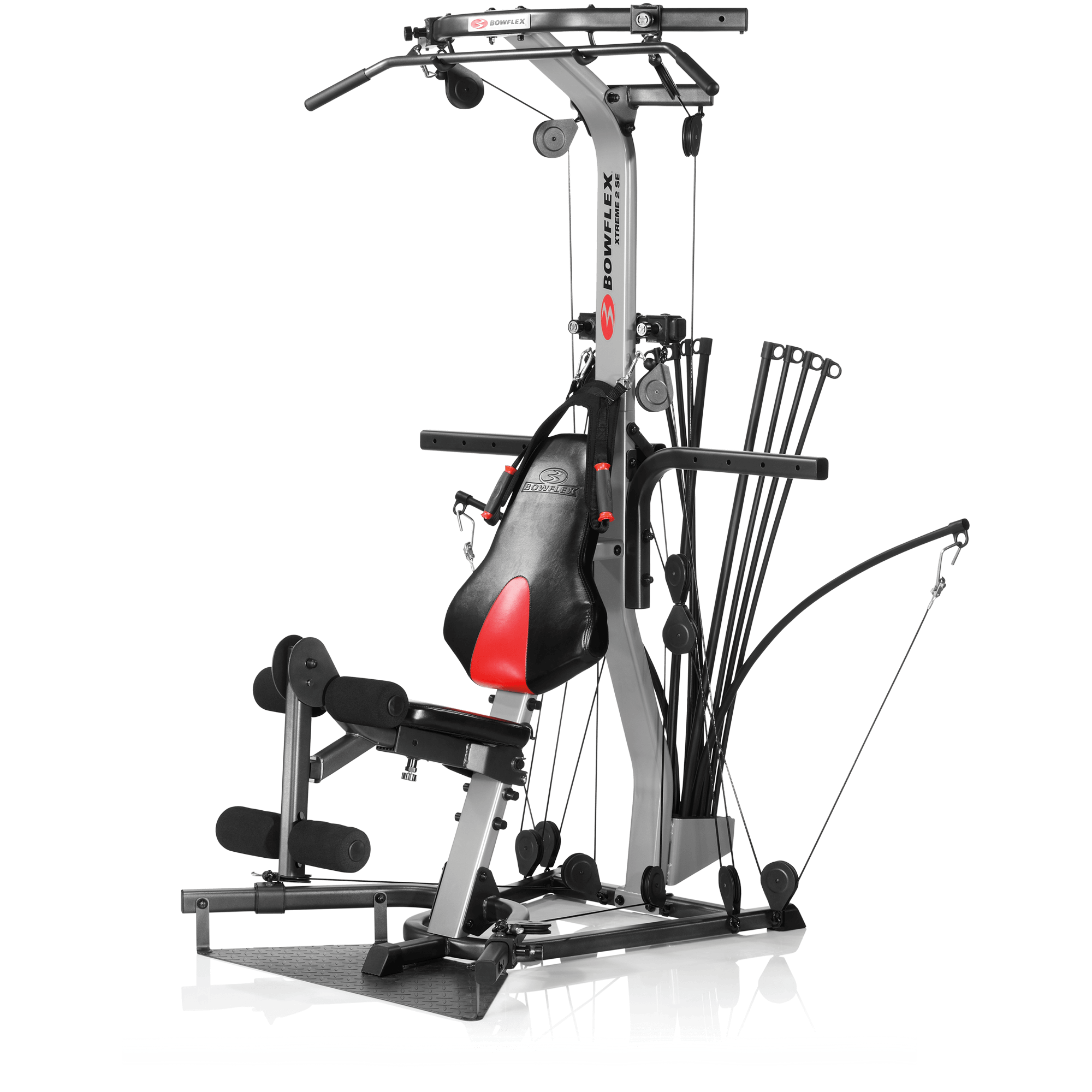
The Xtreme 2 SE has been a staple recommendation for years, and for good reason: it hits that sweet spot where price, quality, and exercise variety all intersect nicely. With 70+ exercises and 210 pounds of resistance (upgradable to 310 or 410), it handles the needs of most recreational and intermediate lifters without complaint.
The no-cable-change design is a genuine time saver. Switching between exercises usually involves just repositioning yourself or swapping a handle attachment — no rerouting cables through pulleys. During a circuit-style workout, this shaves minutes off your session and keeps your heart rate where it should be.
The lat tower and squat station both perform well, though heavy squatters will probably outgrow the resistance eventually. For hypertrophy-focused training with controlled tempos — which, frankly, builds more muscle for most people anyway — the weight is more than adequate.
One honest note: the seat and back pad could be more comfortable. Adding a folded towel solves it, but at this price, better padding shouldn’t be a DIY project.
Pros:
- No-cable-change system saves real workout time
- 70+ exercises with solid variety
- Upgradable resistance up to 410 lbs
- Reasonable footprint for apartment or spare room use
- Proven reliability over years on the market
Cons:
- Seat padding is thin
- Leg developer attachment feels flimsy
- Intermediate lifters may max out the base resistance
4. Marcy Smith Cage System (MWM-4008) — Best Budget Powerhouse

Here’s the thing about the Marcy MWM-4008: it has no business being this capable at its price point. For roughly the cost of a year’s gym membership, you get a Smith machine, cable crossover system, pull-up bar, leg developer, and a flat/incline/decline bench — all integrated.
The 300-pound weight capacity on the Smith machine handles squats, bench press, and shoulder press for most home gym users. The linear bearings aren’t as glass-smooth as the Force USA’s, but they’re perfectly functional. The dual-action leg developer covers both extensions and curls, which is a nice inclusion at this price.
Build quality is where the budget shows. The steel gauge is thinner, the cables feel slightly rougher, and the weight stack plates have a bit more play than premium machines. None of this is a dealbreaker — plenty of people have trained on this machine for five-plus years with basic maintenance — but it’s worth setting expectations.
Assembly is the real test of patience here. Plan for 4–6 hours, have a second pair of hands available, and maybe keep some snacks nearby. The instruction manual has earned its notorious reputation.
Pros:
- Incredible value for the feature set
- Integrated Smith machine, cables, and bench
- 300 lb capacity covers most users
- Pull-up bar included
- Compact enough for a single-car garage
Cons:
- Thinner steel and rougher cable action than premium options
- Assembly instructions are genuinely frustrating
- Weight plates not included (you’ll need Olympic plates)
5. Total Gym XLS — Best for Small Spaces and Beginners

The Total Gym XLS takes a completely different approach from everything else on this list, and that’s exactly why it deserves a spot. Instead of cables and weight stacks, it uses an incline bodyweight system — you adjust the incline level to change resistance, and your own body provides the load.
This makes it perfect for two specific groups: people with limited space (it folds up and slides under a bed or into a closet) and beginners who find traditional weight machines intimidating. The learning curve is almost nonexistent. Hop on, grab the handles, and start pressing, rowing, or squatting within minutes.
With 80+ exercises and 12 resistance levels supporting users up to 400 pounds, it’s more versatile than the infomercial reputation suggests. The glide board moves smoothly, the pulley system holds up well, and the included exercise flip chart actually helps with workout planning.
The limitation is obvious: advanced lifters will run out of resistance. If you’re already squatting 225 pounds, this isn’t going to challenge you on leg day. But for general fitness, rehabilitation, and getting started with strength training, the XLS is remarkably effective.
Pros:
- Folds flat for storage — a genuine space saver
- Extremely beginner-friendly
- Smooth, low-impact movement pattern
- Supports users up to 400 lbs
- Quick setup and exercise transitions
Cons:
- Limited resistance ceiling for intermediate/advanced lifters
- Not ideal for heavy strength training
- Bodyweight-based system doesn’t replicate free weight feel
How We Chose These Products
Selecting the best all in one home gym machine required more than reading spec sheets. Each machine on this list was evaluated across several real-world criteria:
- Exercise variety and muscle coverage — A machine that skips legs or has a weak cable system doesn’t qualify as “all in one.” Every pick covers upper body, lower body, and core effectively.
- Build quality and durability — Welds were inspected, cables were stress-tested, and frames were checked for wobble under load. Budget-friendly doesn’t have to mean flimsy.
- Resistance range and progression — Beginners need a low enough starting point, and intermediate lifters need room to grow. Machines with upgradable resistance scored higher.
- Footprint and practicality — A machine that requires a 12×12 dedicated room eliminates too many buyers. Space efficiency matters.
- Assembly experience — Because a machine you can’t put together is a machine you’ll return.
- User feedback over time — Long-term owner reviews (6+ months) revealed durability patterns that short-term testing alone can’t catch.
Buying Guide: How to Choose the Right All in One Home Gym Machine
Available Space and Ceiling Height
Before anything else, measure your room. Write down the length, width, and ceiling height, then subtract at least 12 inches from each dimension for comfortable movement and airflow around the machine. Machines with lat pulldown towers or pull-up bars typically need a minimum of 7.5 feet of ceiling clearance. Folding options like the Total Gym XLS are lifesavers for apartment dwellers who can’t dedicate a permanent footprint to equipment.
Resistance Type and Maximum Weight
Home gym machines generally use one of three resistance systems: traditional weight stacks, power rod or SpiraFlex technology, or bodyweight-based incline systems. Weight stacks feel the most like commercial gym equipment. Power rods offer smoother resistance curves and are quieter. Bodyweight systems are the most space-efficient but cap out faster.
Think honestly about current strength levels and where things might be in two years. A machine that maxes out at 150 pounds sounds fine today but becomes a frustrating limitation quickly once progressive overload kicks in.
Exercise Variety and Attachment Options
Count the exercises, but more importantly, examine which exercises are possible. A machine boasting 100+ exercises sounds impressive until realizing that 40 of them are minor grip variations on the same movement. Look for machines that genuinely cover the core movement patterns: push, pull, squat, hinge, and carry/rotation. Bonus points for machines that accept third-party attachments like rope handles, V-bars, and ankle straps.
Your Training Goals
Someone rehabbing a shoulder injury has wildly different needs than someone trying to build maximum muscle. Beginners and rehab-focused users thrive with smoother, guided movement patterns (Smith machines, bodyweight glide boards). Intermediate and advanced lifters benefit from functional trainers and cable systems that allow free-range movement and heavier loading. Match the machine to the mission, not the marketing.
Frequently Asked Questions
Can an all in one home gym machine replace a full gym membership?
For most people — absolutely. A quality all in one machine covers 80–90% of what the average gym-goer actually does in a commercial facility. The missing 10–20% is usually specialized equipment like treadmills, specific plate-loaded machines, or the social atmosphere. For strength training and muscle building, these machines handle the job remarkably well.
How long does assembly typically take?
Expect anywhere from 2 to 6 hours depending on the machine’s complexity. Simpler bodyweight systems like the Total Gym XLS take under an hour. Cable-and-stack machines like the Bowflex Revolution need 3–4 hours. Full Smith cage systems like the Marcy MWM-4008 can push past 5 hours. A second person makes every assembly dramatically easier and safer.
Are these machines safe to use without a spotter?
Yes — and this is actually one of their biggest advantages over free weights. Cable systems and guided Smith bars have built-in safety stops and controlled movement paths. You can train to failure on a chest press or squat without worrying about a barbell pinning you to a bench. That said, always read the manual’s weight limits and use safety pins when available.
How much should you spend on a quality all in one home gym machine?
Budget around $600–$800 for a solid entry-level machine, $1,000–$1,800 for a capable mid-range option, and $2,000–$3,500 for a premium setup that rivals commercial equipment. Think of it as investing what amounts to 2–4 years of gym membership fees into equipment that lasts 10–15 years with basic maintenance.
Conclusion
Finding the best all in one home gym machine comes down to matching honest self-assessment with the right equipment. The Bowflex Revolution earns the top spot for its unmatched combination of smooth resistance, exercise variety, and space efficiency. The Force USA G3 is the clear winner for anyone who wants to train heavy and treat their garage like a serious gym. The Bowflex Xtreme 2 SE nails the mid-range sweet spot, while the Marcy MWM-4008 delivers shocking value for budget-conscious buyers. And the Total Gym XLS proves that simplicity and effectiveness aren’t mutually exclusive — especially when storage space is at a premium.
Whatever your budget, space, or training level, one of these five machines can genuinely replace a gym membership and become the centerpiece of a home training setup that lasts for years. Skip the decision paralysis, pick the one that fits your life, and start training.
Leave a Reply