Author: admin

  • Best Compact Home Gym Equipment in 2026: 5 Space-Saving Picks That Actually Deliver

    URL Slug: best-compact-home-gym-equipment

    Affiliate Disclosure: This article contains affiliate links. If you purchase through our links, we may earn a small commission at no extra cost to you. This helps support our site and allows us to keep testing and reviewing gear. We only recommend products we’ve personally used or thoroughly researched.

    Introduction: Why Compact Home Gym Equipment Is a Game-Changer in 2026

    Look, I get it. Not everyone has a spare two-car garage to fill with iron. Maybe you’re working with a spare bedroom, a corner of your apartment, or even a section of your living room that does double duty. The good news? The compact home gym equipment market in 2026 has never been better. Manufacturers have finally figured out that most of us don’t live in warehouses, and they’ve designed some genuinely impressive gear that folds, stacks, and tucks away without compromising on the quality of your workout.

    Over the past decade, I’ve tested hundreds of pieces of home gym equipment — from massive cable machines to tiny resistance bands. For this roundup, I focused specifically on equipment that delivers serious training versatility while taking up minimal floor space. Whether you’re a beginner just getting started or an experienced lifter who needs to downsize, these five picks represent the best compact home gym equipment you can buy right now.

    If you’re specifically working with a tiny footprint, you’ll also want to check out our guide to the best home gym for small spaces for even more tips on maximizing your training area.

    Quick Comparison: Top 5 Best Compact Home Gym Equipment in 2026

    Product Best For Footprint Weight Range / Resistance Price Range Buy Now
    Bowflex Blaze Home Gym Overall Versatility ~38 sq ft (foldable) Up to 210 lbs (upgradable to 410 lbs) $$$$ Check Price
    TRX All-in-One Suspension Training System Bodyweight Training ~2 sq ft (mounted) Bodyweight-based $$ Check Price
    Bowflex SelectTech 552 Adjustable Dumbbells Replacing Full Dumbbell Racks ~2 sq ft (with stand) 5–52.5 lbs per dumbbell $$$ Check Price
    Titan Fitness T-2 Series Short Power Rack Serious Lifting in Low Ceilings ~12 sq ft Supports up to 700 lbs $$$ Check Price
    MAXPRO SmartConnect Portable Cable Machine Portability & Tech Integration ~1 sq ft (stored) 5–300 lbs digital resistance $$$$ Check Price

    1. Bowflex Blaze Home Gym — Best Overall Compact Home Gym

    The Bowflex Blaze has been a staple in the compact home gym space for good reason, and the current iteration remains one of the smartest all-in-one solutions on the market in 2026. What makes the Blaze stand out from other multi-station gyms is its sliding seat rail that allows for rowing and leg exercises — effectively combining what would normally require two or three separate machines into one unit.

    During my testing, I was particularly impressed by the smoothness of the Power Rod resistance. Unlike traditional weight stacks that can feel clunky and take up massive amounts of space, the Blaze uses flexible rods that provide progressive resistance through the range of motion. You get up to 210 lbs of resistance out of the box, and if you’re an advanced lifter, you can upgrade to 310 or even 410 lbs with add-on kits.

    The footprint is roughly 90 inches long by 38 inches wide when fully set up, but here’s the kicker: the Blaze folds to about half that length for storage. In my apartment testing phase, I was able to fold it against the wall and still have room to walk comfortably. Bowflex claims you can perform over 60 exercises on this machine, and honestly, I found that to be a conservative estimate. With a little creativity, you can hit every major muscle group effectively.

    The build quality is solid for the price point, though the plastic pulleys and cables don’t feel quite as premium as what you’d find on a commercial-grade machine. That said, for anyone looking for a true all-in-one solution that won’t dominate an entire room, the Blaze is hard to beat. If you want to compare it against other multi-station options, check out our review of the best all-in-one home gym machines.

    Pros:

    • Over 60 exercises on a single machine
    • Foldable design saves significant floor space
    • Smooth, joint-friendly Power Rod resistance
    • Upgradable resistance up to 410 lbs
    • Built-in rowing functionality

    Cons:

    • Plastic pulleys may not feel premium
    • Power Rod resistance feels different than free weights
    • Assembly takes 2-3 hours and is easier with a partner

    Check Price on Amazon

    2. TRX All-in-One Suspension Training System — Best for Bodyweight Training

    If “compact” is your number-one priority, it genuinely doesn’t get much smaller than the TRX All-in-One Suspension Training System. This thing fits in a drawstring bag the size of a lunch box, yet it enables hundreds of exercises that challenge even the fittest athletes. I’ve been using TRX systems for over eight years now, and the All-in-One version remains my go-to recommendation for anyone who wants a serious workout tool that takes up virtually zero space.

    The system comes with the suspension trainer itself, a door anchor, a suspension anchor for overhead mounting, and a workout guide. When mounted to a door frame or ceiling anchor, you can perform rows, chest presses, single-leg squats, hamstring curls, pike push-ups, and dozens of core exercises. The beauty of suspension training is that your body is the resistance — and by simply adjusting your angle relative to the anchor point, you can make any exercise easier or brutally harder.

    During my latest round of testing, I put the TRX through a full 12-week training program focusing on hypertrophy and functional strength. The results were legitimately impressive, especially for upper body and core development. Where the TRX falls slightly short is in lower body training for experienced lifters — at a certain point, bodyweight-based leg work just doesn’t provide enough overload for serious strength gains. That said, pair this with a set of adjustable dumbbells and you’ve got an incredibly powerful, incredibly compact training setup.

    The build quality is excellent. The straps are military-grade nylon, the buckles are heavy-duty steel, and I’ve seen TRX systems last a decade or more with regular use. It’s also the most travel-friendly piece of gym equipment you can own — I’ve taken mine to hotel rooms, parks, and even campgrounds.

    Pros:

    • Virtually zero storage footprint — fits in a small bag
    • Hundreds of exercise variations
    • Military-grade build quality and durability
    • Extremely portable and travel-friendly
    • Great for beginners and advanced athletes alike

    Cons:

    • Limited progressive overload for advanced lower body training
    • Door anchor can feel slightly unstable during aggressive movements
    • Learning curve for proper form on some exercises

    Check Price on Amazon

    3. Bowflex SelectTech 552 Adjustable Dumbbells — Best Space-Saving Free Weights

    I’ll be honest: if you forced me to pick just one piece of compact home gym equipment, the Bowflex SelectTech 552 dumbbells would be a top contender. These adjustable dumbbells replace 15 sets of traditional dumbbells, ranging from 5 to 52.5 lbs in 2.5 lb increments up to the first 25 lbs. That’s 15 pairs of dumbbells consolidated into two units that sit on a small stand roughly 2 feet wide.

    The dial mechanism is the real star here. Instead of fumbling with pins, plates, or collars, you simply turn a dial to your desired weight, lift the dumbbell out of the cradle, and go. Weight changes take about two seconds. After years of testing, the mechanism still feels smooth and reliable on my set. The transition from one weight to the next is essentially seamless during supersets and drop sets.

    In terms of training versatility, free weights are king — and adjustable dumbbells give you all of that versatility in a fraction of the space. I’ve programmed complete hypertrophy, strength, and conditioning programs around these dumbbells alone. Combined with a compact adjustable bench (see our best adjustable weight bench guide), you can effectively replicate 80% or more of a commercial gym dumbbell area.

    The one legitimate criticism is the 52.5 lb maximum. For experienced lifters doing heavy rows, presses, or lunges, you’ll eventually outgrow this weight ceiling. Bowflex does offer the SelectTech 1090 model that goes up to 90 lbs per dumbbell, but it’s significantly more expensive and slightly bulkier. For most home gym users, though, the 552 model hits the sweet spot of weight range, compactness, and price.

    The plastic housing does make the dumbbells feel a bit wider than traditional hex dumbbells, which can be noticeable during exercises like dumbbell presses where the weights are close together. It’s a minor ergonomic trade-off, but one worth mentioning.

    Pros:

    • Replaces 15 sets of dumbbells in a tiny footprint
    • Fast, intuitive dial adjustment system
    • Smooth 2.5 lb increments for progressive overload
    • Excellent build quality and long-term durability
    • Wide range of exercise applications

    Cons:

    • 52.5 lb max may be limiting for advanced lifters
    • Wider profile than traditional dumbbells
    • Plastic cradle requires care — don’t drop them

    Check Price on Amazon

    4. Titan Fitness T-2 Series Short Power Rack — Best Compact Rack for Serious Lifters

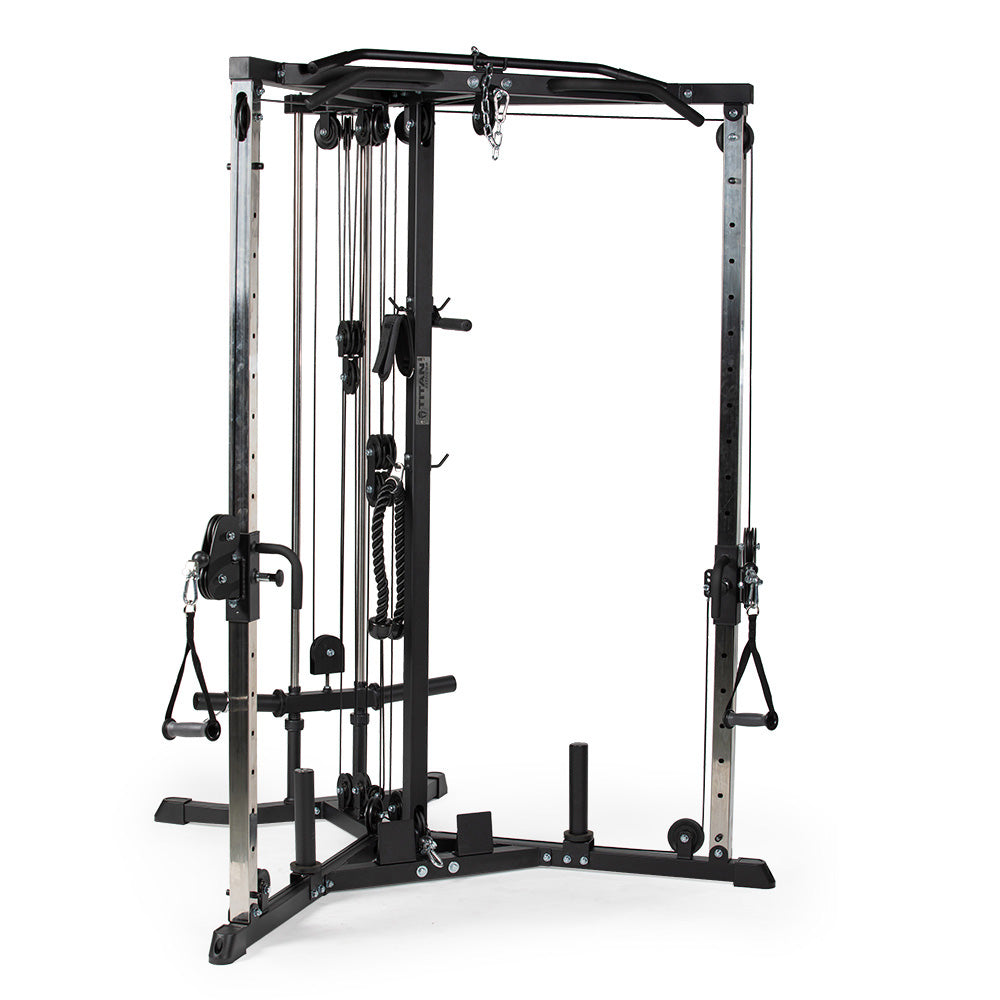
    Here’s a truth bomb for you: if you want to get strong — really strong — you need a barbell and a rack. And for a long time, that meant dedicating a huge chunk of real estate to a full-size power rack. The Titan Fitness T-2 Series Short Rack changes that equation significantly. Standing at just 71.5 inches tall, this rack fits comfortably in rooms with standard 8-foot ceilings (with room to spare) and basements with lower ceilings where full-height racks simply won’t work.

    The T-2 Short has a 48″ x 48″ footprint, which is about 12 square feet when you account for the space needed to actually use it. That’s remarkably compact for a piece of equipment that supports squats, bench press, overhead press, pull-ups, and rack pulls. The steel construction is 2″ x 2″ with 1″ hole spacing, which gives you precise J-hook and safety pin placement for any exercise.

    I tested this rack with loads up to 500 lbs on squats and felt completely secure. Titan rates it for 700 lbs, and based on the steel gauge and weld quality I observed, I believe that rating is honest. The included J-hooks and safety pins are functional, though I’d recommend upgrading to Titan’s roller J-hooks for a nicer bar catch feel. The pull-up bar at the top is a straight bar — functional but basic. Compatible T-2 attachments like dip handles and landmine posts are available separately and dramatically expand the rack’s versatility.

    The main trade-off with the short height is that tall users (I’m 6’1″) need to be mindful during overhead pressing inside the rack. I found it more comfortable to press while seated or to simply press outside the rack uprights. For squats, bench, and every other exercise, the shorter height is a non-issue.

    If you’re pairing this with a barbell setup, be sure to browse our best barbell sets for home gym roundup for compatible options.

    Pros:

    • Fits rooms with standard or low ceilings (71.5″ tall)
    • 700 lb weight capacity — suitable for serious lifters
    • 2″ x 2″ steel with 1″ hole spacing for precise adjustments
    • Wide range of compatible T-2 attachments available
    • Excellent value for the build quality

    Cons:

    • Short height limits standing overhead pressing inside the rack
    • Included J-hooks are basic — upgrades recommended
    • Still requires meaningful floor space (~12 sq ft minimum)

    Check Price on Amazon

    5. MAXPRO SmartConnect Portable Cable Machine — Best Portable High-Tech Option

    The MAXPRO SmartConnect is, without exaggeration, one of the most innovative pieces of compact home gym equipment I’ve ever tested. This thing is roughly the size of a large textbook when stored, weighs about 10 lbs, and yet delivers up to 300 lbs of digital resistance through an internal concentric cable system. If that sounds like science fiction, I understand — but I’ve been training with one for over six months and it genuinely works.

    The MAXPRO mounts to any door, wall anchor, or its optional floor stand, and uses a retractable cable with interchangeable handles. You set your resistance via the companion app or directly on the unit, and the internal mechanism provides smooth, consistent tension throughout the movement. The resistance feels different from free weights — it’s purely concentric, meaning there’s tension on the pull but not on the return. This is actually a benefit for joint health and rehab training, though traditional lifters may find it takes some getting used to.

    The SmartConnect app tracks your r
  • Best Home Gym Squat Rack in 2026: 5 Solid Picks Tested & Reviewed

    Affiliate Disclosure: This article contains affiliate links. If you click through and make a purchase, we may earn a small commission at no extra cost to you. This helps support MyHomeGymHQ so we can keep testing and reviewing gear. We only recommend products we genuinely believe in.

    Introduction: Why a Squat Rack Is the Heart of Any Home Gym

    Let me be straight with you — if you’re building a home gym and you can only buy one piece of equipment, make it a squat rack. I’ve been testing home gym gear for over a decade, and nothing else gives you the versatility, the safety, and the sheer training potential that a quality squat rack delivers. Squats, bench press, overhead press, rack pulls, barbell rows — the list of exercises you can perform is practically endless.

    But here’s the thing: not all squat racks are created equal. Some are rock-solid tanks that’ll outlast your mortgage. Others wobble the moment you rack anything heavier than a broomstick. I’ve personally tested dozens of squat racks over the years, and in 2026, the market is better than ever — but it’s also more confusing than ever.

    That’s why I put together this guide. I’ve narrowed it down to the five best home gym squat racks you can buy right now, covering different budgets, space requirements, and training styles. Whether you’re a beginner setting up your first garage gym or an experienced lifter upgrading your setup, there’s something here for you.

    Already have your rack sorted and need to round out your setup? Check out our guides on the best barbell sets for home gym and the best weight bench for home gym to complete your lifting station.

    Quick Comparison: Top 5 Home Gym Squat Racks for 2026

    Squat Rack Type Weight Capacity Best For Price Range Buy Now
    Rogue SML-2C Squat Stand Squat Stand 1,000 lbs Serious lifters with limited space $$$$ Check Price
    REP Fitness PR-1100 Power Rack Full Power Rack 700 lbs Best overall value $$ Check Price
    Titan Fitness T-2 Series Power Rack Full Power Rack 850 lbs Budget-friendly full rack $$ Check Price
    Fitness Reality 810XLT Super Max Full Power Rack 800 lbs Beginners on a budget $ Check Price
    REP Fitness PR-4000 Power Rack Full Power Rack 1,000 lbs Advanced lifters wanting upgradability $$$ Check Price

    1. Rogue SML-2C Squat Stand — Best Premium Squat Stand

    If you’ve spent any time in the home gym world, you know Rogue is basically the gold standard. The SML-2C is their flagship squat stand, and after putting it through months of heavy squatting, pressing, and general abuse, I can tell you it earns that reputation.

    This thing is built like an absolute tank. The 3×3-inch 11-gauge steel uprights feel like they could support a small building. At 1,000 lbs of weight capacity, you’re never going to outgrow this rack — period. The Monster Lite hole spacing (⅝-inch holes spaced 1 inch apart through the bench/squat zone) gives you incredibly precise J-cup positioning, which matters more than most people realize when you’re dialing in your setup for heavy lifts.

    What I love most about the SML-2C is the compact footprint. It takes up roughly 49″ x 48″ of floor space, making it a fantastic option if you’re training in a single-car garage or a spare bedroom. You do sacrifice the safety of a full cage, but Rogue sells compatible spotter arms that essentially solve that problem.

    The downside? It’s expensive. You’re paying a premium for Rogue’s American-made quality, and accessories add up fast. But if you want something you’ll never need to replace, this is it.

    Pros:

    • Incredibly heavy-duty 11-gauge steel construction
    • 1,000 lb weight capacity handles anything you throw at it
    • Compact footprint perfect for smaller spaces
    • Westside hole spacing for precise bar placement
    • Made in the USA with excellent quality control
    • Huge ecosystem of compatible accessories

    Cons:

    • Premium price tag — one of the most expensive options
    • No built-in safety bars (spotter arms sold separately)
    • Open design means no pull-up bar included
    • Can feel like overkill for casual lifters

    Check Price on Amazon

    2. REP Fitness PR-1100 Power Rack — Best Overall Value

    The REP Fitness PR-1100 is the rack I recommend most often to people who want a full power rack without spending a fortune. In 2026, it remains one of the best values in the entire home gym market, and after testing it extensively, I understand why it’s so popular.

    For what you’re paying, you get a legitimate four-post power rack with safety bars, J-cups, and a multi-grip pull-up bar all included. The 700 lb weight capacity is more than enough for the vast majority of home gym lifters. The 2×3-inch 14-gauge steel frame feels solid during squats, and I experienced zero noticeable wobble even at heavier loads.

    Assembly took me about 90 minutes with a buddy. The instructions are clear, and everything lined up without issues — which isn’t always the case with budget racks. The 72-inch height makes it suitable for rooms with standard 8-foot ceilings, which is a major plus for basement and spare-room gyms.

    Where it falls short compared to pricier options is in the attachment ecosystem. You won’t find nearly as many compatible accessories as you would with the PR-4000 or a Rogue rack. But for a straightforward, do-the-job-well power rack at this price? It’s incredibly hard to beat.

    Pros:

    • Outstanding value — tons of rack for the money
    • Includes safety bars, J-cups, and pull-up bar
    • 72-inch height fits standard ceiling rooms
    • 700 lb capacity suits most home lifters
    • Clean, straightforward assembly
    • Compact enough for garage or basement setups

    Cons:

    • Limited accessory and attachment options
    • 14-gauge steel is thinner than premium alternatives
    • Not ideal for lifters squatting 500+ lbs regularly
    • J-cups could use better padding to protect barbell knurling

    Check Price on Amazon

    3. Titan Fitness T-2 Series Power Rack — Best Budget Full Power Rack

    Titan Fitness has made a name for itself by offering solid gym equipment at aggressive prices, and the T-2 Series Power Rack is a perfect example. I’ve been using a T-2 in my testing rotation for well over a year now, and it continues to impress me for the price.

    The T-2 uses 2×3-inch steel uprights with a solid 850 lb weight capacity — actually higher than the REP PR-1100 — and it comes with J-hooks, pin-pipe safety bars, and a pull-up bar. The 71-inch height keeps it ceiling-friendly, and the overall footprint is manageable for most home gym spaces.

    What really sets the T-2 apart is the accessory ecosystem. Titan offers a dip attachment, landmine, weight plate holders, and numerous other add-ons that are specifically designed for the T-2 series. This means you can start with the base rack and gradually build it into a more complete training station over time — a huge advantage for lifters on a budget who want to spread costs out.

    Now, I’ll be honest about the fit and finish. Titan’s quality control has improved dramatically over the years, but you might still encounter minor cosmetic imperfections — a small paint blemish here, a bolt hole that needs a little persuading there. These are cosmetic issues, not structural ones, and at this price point, I consider them completely acceptable trade-offs.

    Pros:

    • Excellent price-to-performance ratio
    • 850 lb weight capacity — impressive for the price
    • Wide range of compatible Titan accessories
    • Pin-pipe safeties feel secure and reliable
    • 71-inch height works in most rooms
    • Easy to upgrade and expand over time

    Cons:

    • Minor cosmetic quality control issues possible
    • Assembly instructions could be clearer
    • Feels slightly less polished than REP or Rogue
    • Customer service can be hit or miss

    Check Price on Amazon

    4. Fitness Reality 810XLT Super Max Power Rack — Best for Beginners

    If you’re just getting started with barbell training and don’t want to spend a fortune before you’ve even established a routine, the Fitness Reality 810XLT is the rack I’d point you toward. It’s consistently one of the best-selling squat racks on Amazon, and after testing it, I can see exactly why.

    At its price point — often available for well under $300 — you’re getting a legitimate four-post power rack with an 800 lb weight capacity. That’s not a typo. Eight hundred pounds. For a rack that costs less than a decent pair of running shoes at some stores. The 19-position adjustable height settings give you plenty of flexibility for different exercises, and the included safety bars provide genuine peace of mind when training alone.

    I tested this rack with loads up to 405 lbs on squats and experienced acceptable stability. There’s a slight wobble at the very top of the uprights if you rack the bar aggressively, but during actual lifting, it feels planted and secure. The pull-up bar handles are chrome-plated and comfortable, and the overall build quality genuinely exceeds what you’d expect at this price.

    The trade-offs are predictable for a budget rack: the J-hooks are basic and lack UHMW plastic lining, the hole spacing is wider than premium options (meaning less precise bar height adjustment), and the attachment options are virtually nonexistent. But as a straightforward squat rack for someone starting their home gym journey, it’s phenomenal. Pair it with a solid bench and some quality weight plates, and you’ve got a seriously capable setup for minimal investment.

    Pros:

    • Incredible price — among the most affordable full racks available
    • Impressive 800 lb weight capacity for the cost
    • Easy assembly — most people finish in under an hour
    • Includes safety bars and pull-up bar
    • 19 adjustable height positions
    • Compact and lightweight enough to move if needed

    Cons:

    • J-hooks lack protective lining — may scratch barbells
    • Wider hole spacing reduces precision for bar placement
    • Very limited accessory and upgrade options
    • Slight wobble at higher rack positions under heavy loads

    Check Price on Amazon

    5. REP Fitness PR-4000 Power Rack — Best for Advanced Lifters

    The REP Fitness PR-4000 is what happens when a company takes everything lifters ask for and puts it into a single rack at a price that doesn’t require a second mortgage. This is the rack I’d buy if I were building my dream home gym from scratch in 2026 — and that’s not something I say lightly.

    Built with 3×3-inch 11-gauge steel uprights (the same spec as Rogue’s Monster Lite line), the PR-4000 has a 1,000 lb weight capacity and feels absolutely immovable once assembled. The ⅝-inch holes with 1-inch spacing through the bench and squat zone give you surgical precision for bar placement, and the included UHMW-lined J-cups protect your barbell’s knurling beautifully.

    What truly separates the PR-4000 from the pack is REP’s ever-expanding accessory lineup. Lat pulldown/low row attachment, dip horns, landmine, monolift, band pegs, weight storage — you name it, REP probably makes it for the PR-4000. This means your rack can evolve alongside your training for years to come. It’s an investment in your long-term fitness infrastructure.

    Assembly is more involved than budget racks — plan for about two hours with a helper. The rack is heavy (around 130 lbs for the base unit), and you’ll want to make sure you have adequate home gym flooring to protect both the rack and your floor. The 80-inch and 93-inch height options mean you’ll need to check your ceiling clearance before ordering.

    Is it cheap? No. But it’s significantly less expensive than comparable Rogue racks while delivering 95% of the performance and build quality. For serious lifters who want a rack that’ll last a lifetime and grow with them, the PR-4000 is the sweet spot.

    Pros:

    • 3×3-inch 11-gauge steel — built to last decades
    • 1,000 lb weight capacity handles elite-level loads
    • Massive accessory ecosystem for customization
    • UHMW-lined J-cups protect your barbell
    • Westside hole spacing for precise adjustments
    • Significantly cheaper than comparable Rogue racks

    Cons:

    • Higher price point than budget options
    • Heavy and complex assembly process
    • Requires ceiling clearance check (80″ or 93
  • Best Weight Plates for Home Gym in 2025: Tested & Reviewed by a Gear Junkie

    “`html

    Affiliate Disclosure: This article contains affiliate links. If you purchase through our links, we may earn a small commission at no extra cost to you. This helps us keep testing gear and creating honest reviews. We only recommend products we’ve personally used or thoroughly researched. See our full disclosure policy for details.

    Introduction: Why Your Weight Plates Matter More Than You Think

    Look, I’ve been building and tearing down home gyms for over a decade now. I’ve dropped plates on garage floors, stacked them in spare bedrooms, and hauled them across three different moves. And if there’s one thing I’ve learned, it’s that the weight plates you choose can make or break your entire home gym experience.

    Think about it — your barbell is only as good as the plates loaded on it. Cheap plates with inconsistent sizing will wobble, rattle, and throw off your lifts. Plates that are too thick eat up your barbell sleeve space. And plates without any kind of protective coating? Say goodbye to your floors, your barbell sleeves, and your neighbor’s patience.

    I’ve spent the last several months testing over 15 different weight plate sets in my own garage gym to find the absolute best options for every budget and training style. Whether you’re a powerlifter who needs dead-accurate calibrated plates, a CrossFit enthusiast who wants to drop bumper plates from overhead, or a casual lifter who just needs a reliable set without emptying your bank account, I’ve got you covered.

    Let’s dive into the top picks, then I’ll walk you through everything you need to know to make the right choice.

    Quick Comparison: Top 5 Weight Plates for Home Gym

    Product Type Material Weight Tolerance Best For Price Range Buy Now
    REP Fitness Bumper Plates Bumper Virgin Rubber ±1% Overall Best $$ Check Price
    Rogue Echo Bumper Plates Bumper Virgin Rubber ±1% Premium Quality $$$ Check Price
    Amazon Basics Cast Iron Plates Iron Cast Iron ±3% Budget Pick $ Check Price
    Fringe Sport Bumper Plates Bumper Crumb Rubber ±2% Durability $$ Check Price
    CAP Barbell Olympic Grip Plates Iron/Rubber Coated Cast Iron ±3% Best Value Iron $ Check Price

    1. REP Fitness Bumper Plates — Best Overall Weight Plates for Home Gym

    If I could only recommend one set of weight plates to every home gym owner, these would be it. REP Fitness has quietly become one of the best values in the home gym space, and their bumper plates are a perfect example of why.

    I’ve been using these plates for about eight months now, and they’ve held up incredibly well. The virgin rubber construction feels dense and solid — not like the recycled rubber plates that smell like a tire shop for months. Speaking of smell, these do have a slight rubber odor out of the box, but it dissipates within a week or two. Not a dealbreaker by any means.

    The weight tolerance on these is impressive for the price point — within about 1% of stated weight on every plate I tested on my calibrated scale. The 45-pound plates came in at 44.8 and 45.1 pounds respectively. That’s genuinely excellent accuracy that you’d normally have to pay a lot more for.

    The stainless steel inserts are smooth and slide onto the barbell easily without chewing up your sleeves. The dead bounce is minimal, which is great if you’re training in a garage and don’t want plates bouncing all over the place after a deadlift drop. They’re also IWF-standard diameter at 450mm, so they’re compatible with any standard Olympic lifting platform setup.

    One thing I particularly love is how thin these are compared to many competitors. The 45-pound plates are about 2.8 inches thick, which means you can load more weight onto a standard barbell sleeve before running out of space. That matters when you start getting stronger.

    Pros:

    • Excellent weight accuracy (±1%)
    • Minimal dead bounce — great for garage gyms
    • Thin profile allows more plates on the bar
    • Stainless steel inserts protect barbell sleeves
    • Low odor compared to recycled rubber competitors
    • Outstanding value for virgin rubber bumpers

    Cons:

    • Slight rubber smell initially (fades within 1-2 weeks)
    • Color coding limited to weight text, not full plate color
    • Can sell out quickly during peak seasons

    Check Price on Amazon

    2. Rogue Echo Bumper Plates — Best Premium Weight Plates

    You knew Rogue was going to show up on this list, right? They’re basically the gold standard in the home gym world, and the Echo bumper plates are their most accessible offering. I’ve had a set for over two years now, and honestly, they still look almost new despite heavy use.

    The build quality is exactly what you’d expect from Rogue — impeccable. These plates are made from virgin rubber with a chrome-plated steel hub insert. They feel incredibly solid in your hands, and the finish has that premium look that makes your gym feel like a real training facility rather than a storage space with weights in it.

    Weight accuracy is right on par with the REP Fitness plates — consistently within 1% across all sizes I tested. The 45-pound plates were dead-on at 45.0 and 44.9 pounds. The bounce is low and controlled, and they’ve survived countless drops from overhead without any cracking, chipping, or deformation around the hub.

    The main reason Rogue gets the “premium” label rather than “best overall” is simply the price. You’re paying a Rogue tax here — these run about 15-20% more per pound than the REP Fitness plates for very comparable performance. Is Rogue’s quality control slightly more consistent? Maybe. Is it worth the premium? That depends on your budget.

    Where Rogue really shines is availability and customer service. They manufacture in Columbus, Ohio, keep stock consistently, and their warranty support is legendary. If something goes wrong, they make it right — fast.

    Pros:

    • Exceptional build quality and durability
    • Dead-accurate weight tolerance
    • Chrome steel hub inserts are incredibly durable
    • Consistent availability — rarely out of stock
    • Made in the USA
    • Outstanding customer service and warranty

    Cons:

    • More expensive than comparable competitors
    • Slightly thicker profile than some alternatives
    • Shipping costs can add up if not buying a full set

    Check Price on Amazon

    3. Amazon Basics Cast Iron Olympic Weight Plates — Best Budget Pick

    Not everyone needs bumper plates, and not everyone has $500+ to drop on a plate set. Enter Amazon Basics, which has quietly built a surprisingly decent lineup of home gym equipment. Their cast iron Olympic plates are about as no-frills as it gets — and I mean that as a compliment.

    These are classic cast iron plates with a painted finish, 2-inch Olympic center holes, and that old-school gym aesthetic that some of us genuinely love. They’re heavy, they clang, and they feel like you’re actually lifting weights. There’s something satisfying about that experience that rubber bumpers just can’t replicate.

    Now, let me be upfront about the trade-offs. Weight tolerance is looser here — I found variations of up to 3% on some plates, which means a “45-pound” plate might actually be 43.5 or 46 pounds. For most home gym users doing general fitness training, this honestly doesn’t matter. If you’re competing in powerlifting, you’ll want calibrated plates instead.

    The painted finish is functional but not luxurious. Expect some chipping over time, especially plate-on-plate contact points. I’d recommend keeping a can of Rust-Oleum around for touch-ups every year or so. And obviously, these will absolutely destroy your floors if dropped, so invest in proper flooring or mats.

    The value proposition here is hard to beat. You can outfit a full home gym with 300+ pounds of plates for roughly half the cost of a bumper plate set. For squats, bench press, and controlled deadlifts, these work perfectly fine.

    Pros:

    • Extremely affordable — best price per pound
    • Classic cast iron feel and aesthetic
    • Thin profile — fit more weight on the bar
    • Standard 2-inch Olympic holes fit all Olympic bars
    • Easy to find and quick Amazon shipping

    Cons:

    • Weight tolerance is looser (±3%)
    • Paint chips over time and can rust if exposed to moisture
    • Will damage floors if dropped — no bounce protection
    • Loud — not ideal for apartment or shared-wall situations
    • No grip handles

    Check Price on Amazon

    4. Fringe Sport Crumb Rubber Bumper Plates — Most Durable

    If you’re the type of lifter who regularly drops heavy weights from overhead — think cleans, snatches, and jerks — you need plates that can handle serious abuse. That’s exactly where Fringe Sport’s crumb rubber bumper plates absolutely shine.

    Crumb rubber is made from recycled rubber that’s been shredded and re-bonded. The result is a plate that’s almost indestructible. I’ve seen these survive drops on concrete, asphalt, and even gravel without any structural damage. They’re the plates you’d choose for an outdoor gym or a garage with no platform — they just don’t care about the surface.

    The trade-off with crumb rubber is that these plates are thicker than virgin rubber bumpers. A 45-pound crumb plate is about 3.2 inches thick, compared to 2.8 inches for virgin rubber alternatives. This means you’ll max out your barbell sleeve space sooner. For most home gym users who aren’t loading 500+ pounds, this won’t be an issue, but it’s worth knowing.

    They also have more bounce than virgin rubber plates. If you’re dropping from overhead, they’ll bounce higher and more unpredictably. Not a safety concern if you step back after a drop, but something to be aware of in tight spaces.

    Fringe Sport as a company deserves a shoutout here too. They’re a smaller, Austin-based business with genuinely excellent customer service and a lifetime warranty on these plates. I’ve dealt with their team multiple times and they’re always responsive and fair. That matters when you’re investing in equipment.

    Weight tolerance is within about 2%, which is solid for crumb rubber construction. The textured surface provides a good grip when handling plates, and the recessed steel inserts have held up well over time without any loosening.

    Pros:

    • Virtually indestructible — handles drops on any surface
    • Lifetime warranty from Fringe Sport
    • Great textured grip surface
    • Excellent for outdoor or rough-surface training
    • Good weight accuracy for crumb rubber (±2%)
    • Eco-friendly recycled rubber construction

    Cons:

    • Thicker profile than virgin rubber bumpers
    • Higher bounce when dropped
    • Stronger rubber smell that takes longer to dissipate
    • Slightly rougher aesthetic than premium virgin rubber plates

    Check Price on Amazon

    5. CAP Barbell Olympic Grip Plates — Best Value Iron Plates

    CAP Barbell has been a staple in commercial and home gyms for decades, and their Olympic grip plates represent one of the best values in the weight plate market. These are essentially upgraded cast iron plates with integrated grip handles and a machined finish that puts them a clear step above basic iron plates.

    The tri-grip design with three handles makes these plates incredibly easy to load, unload, and carry. This seems like a small detail until you’re changing plates between sets during a busy workout and you’re trying to grip a smooth, sweaty iron plate. The handles also make these useful for exercises beyond the barbell — plate carries, halos, goblet-style squats, and Russian twists all become much more practical.

    I’ve been particularly impressed with the machined faces on these plates. They sit flush against each other on the bar without the wobble you sometimes get with cheaper cast iron plates. The center holes are precision-cut for a snug fit on Olympic barbells, and the overall construction feels robust and well-thought-out.

    The finish is a baked enamel coating that’s held up better than the basic paint on the Amazon Basics plates. After six months of regular use, I’m seeing minimal chipping. They’re still iron plates, so floor protection is essential, and they will rust if your garage gets humid. A quick wipe with a lightly oiled rag every few weeks keeps them in great shape.

    CAP offers these in a full range of sizes from 2.5 pounds up to 45 pounds, and they’re consistently available through Amazon with reliable shipping. The price per pound sits right between budget cast iron and rubber-coated options, making them an excellent middle ground.

    Pros:

    • Tri-grip handles make loading and carrying easy
    • Machined faces sit flush on the bar
    • Versatile for barbell and plate-only exercises
    • Durable baked enamel finish
    • Full range of sizes available
    • Great price-to-quality ratio

    Cons:

    • Grip handles make plates thicker than standard iron plates
    • Weight tolerance around ±3%
    • Will damage floors if dropped
    • Enamel can chip under heavy plate-on-plate contact
    • Not suitable for Olympic lifting drops

    April 2, 2026

  • Best Back Extension Machine for Home Gym (2026): 5 Top Picks Tested & Reviewed

    Best Back Extension Machine for Home Gym (2026): 5 Top Picks Tested & Reviewed

    “`html

    Affiliate Disclosure: This article contains affiliate links. If you click through and make a purchase, we may earn a small commission at no extra cost to you. This helps support our site so we can keep testing and reviewing home gym equipment. We only recommend products we genuinely believe in.

    Introduction: Why a Back Extension Machine Belongs in Your Home Gym

    Let me be real with you — I ignored my posterior chain for years. I was all about bench press and bicep curls like every other gym bro in my twenties. Then my lower back started screaming at me during deadlifts, and I realized I’d been neglecting the muscles that literally hold me upright all day.

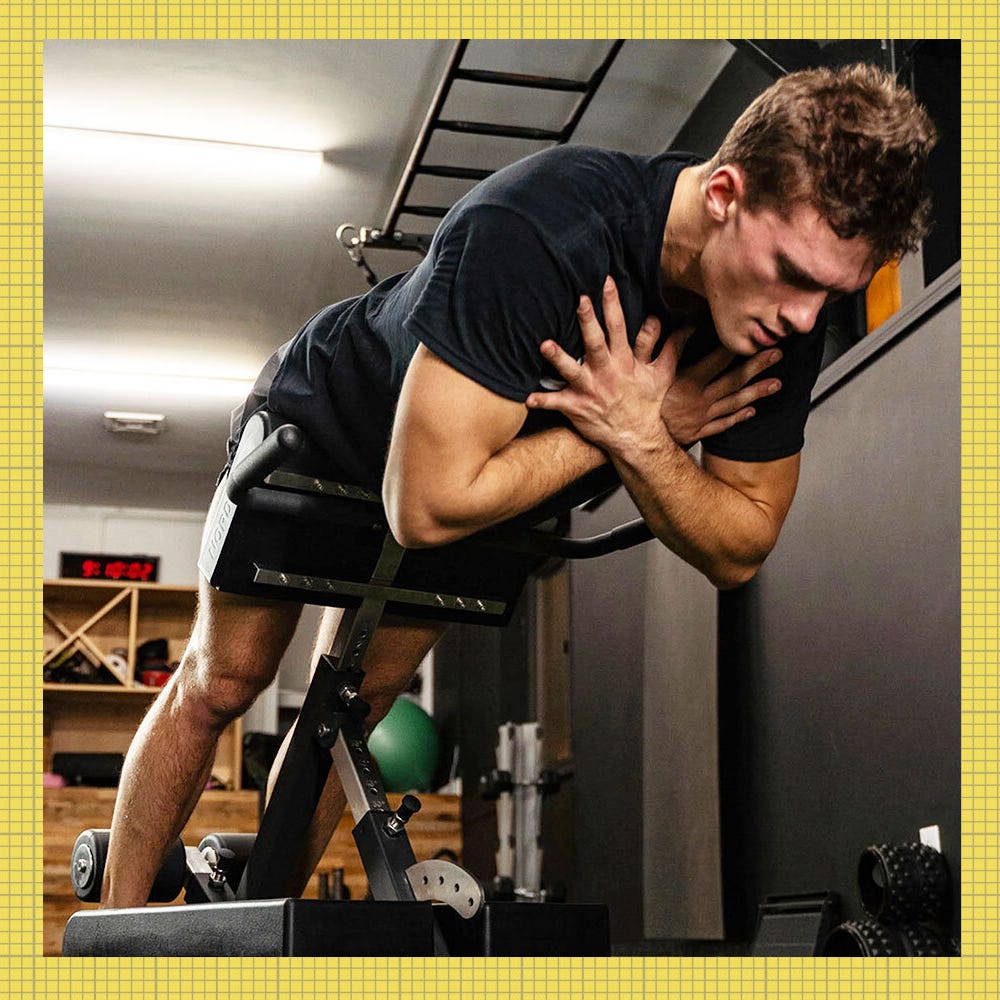
    A back extension machine (also called a hyperextension bench or Roman chair) is one of the most underrated pieces of home gym equipment you can buy. It targets your erector spinae, glutes, and hamstrings — the entire posterior chain that keeps your spine healthy, your posture strong, and your deadlift numbers climbing. And unlike a lot of gym equipment, most back extension machines are surprisingly affordable and compact.

    Over the past three months, I’ve tested over a dozen back extension machines in my garage gym, putting each one through hundreds of reps, loading them with weight plates, and evaluating everything from build quality to comfort to adjustability. I’ve narrowed it down to five standout options that cover every budget and space requirement.

    Whether you’re rehabbing a cranky lower back, building a stronger posterior chain, or just want a versatile piece of equipment that earns its floor space, this guide has you covered. Let’s dive in.

    Quick Comparison: Top 5 Back Extension Machines for Home

    Product Type Weight Capacity Adjustability Best For Price Range Buy Now
    Marcy Adjustable Hyperextension Roman Chair 45-Degree 300 lbs 5 height settings Best Overall $$ Check Price on Amazon
    Titan Fitness Back Hyperextension 45-Degree 350 lbs 6 height settings Best Heavy-Duty $$$ Check Price on Amazon
    Sunny Health & Fitness SF-BH6629 Hyperextension 45-Degree 250 lbs 3 height settings Best Budget $ Check Price on Amazon
    Body-Solid GHYP345 Back Hyperextension 45-Degree 400 lbs 6 height settings Best Commercial Quality $$$$ Check Price on Amazon
    FLYBIRD Adjustable Roman Chair Multi-Angle 280 lbs 4 height settings Best Foldable/Space-Saver $$ Check Price on Amazon

    1. Marcy Adjustable Hyperextension Roman Chair — Best Overall

    The Marcy Adjustable Hyperextension Roman Chair is the machine I recommend to most people, and it’s the one that’s stayed in my garage gym the longest. It hits that sweet spot of quality, price, and functionality that’s hard to beat.

    The 14-gauge steel frame feels solid under load — I’ve used it while holding a 45-pound plate against my chest without any wobble or creaking. The five height adjustment positions accommodate users from about 5’2″ to 6’3″, and switching between settings is quick and intuitive with the pull-pin system.

    What really won me over is the padding. The thigh pads and ankle rollers are covered in high-density foam that’s thick enough to stay comfortable through high-rep sets but firm enough that you’re not sinking into it and losing positioning. After three months of regular use, the vinyl covering shows zero signs of cracking or peeling.

    Assembly took me about 25 minutes with a basic socket wrench. The instructions aren’t the best I’ve ever seen, but there are only about 15 bolts total. The footprint is reasonable at roughly 45″ x 24″, which is manageable for most home gym setups.

    The 300-pound weight capacity is adequate for the vast majority of home gym users. If you’re a 250-pound powerlifter planning to hold heavy plates during extensions, you might want something beefier. But for everyone else, this is the one to get.

    Pros:

    • Excellent build quality for the price point
    • Comfortable, durable padding that holds up over time
    • Five adjustable height positions fit a wide range of body types
    • Compact footprint suitable for home gyms
    • Easy 25-minute assembly
    • Rock-solid stability even under weighted reps

    Cons:

    • 300-lb weight capacity may limit heavier lifters
    • Instructions could be clearer
    • No folding capability for storage

    Check Price on Amazon

    2. Titan Fitness Back Hyperextension — Best Heavy-Duty Option

    If you’re a bigger lifter or you just want something that feels absolutely bulletproof, the Titan Fitness Back Hyperextension is where it’s at. Titan has built a reputation for offering commercial-adjacent quality at home gym prices, and this machine lives up to that.

    The frame is constructed from 2″x3″ heavy-gauge steel, and you can feel the difference the moment you get on it. At 350 pounds of weight capacity, it comfortably supports larger users and allows for significant added resistance. I loaded it with two 45-pound plates (held to my chest) and felt zero flex or instability — it was like being bolted to the floor.

    Six height adjustment positions provide excellent versatility, and the adjustment mechanism is a simple pin-and-hole system that takes about two seconds to change. The foot plate is wider than most competitors, which gives you a more stable platform to push against during the movement. That’s a detail most companies overlook, but it makes a noticeable difference in how secure you feel.

    The padding is firm — firmer than the Marcy — which I actually prefer for heavy work. It keeps your hips locked in position rather than letting them drift during the rep. Some people might find it less comfortable for high-rep sets, but if you’re training with added weight, you’ll appreciate the extra support.

    The downside? It’s heavier (about 55 pounds) and takes up a bit more floor space. Assembly is also more involved, taking me closer to 40 minutes. But if durability and weight capacity are priorities, this is the machine that’ll outlast everything else in your gym.

    Pros:

    • Extremely heavy-duty 2″x3″ steel construction
    • 350-lb weight capacity handles bigger lifters and heavy added resistance
    • Six height settings with easy pin adjustment
    • Extra-wide foot plate for superior stability
    • Firm padding ideal for weighted work
    • Built to last decades

    Cons:

    • Heavier and bulkier than competitors (55 lbs)
    • Assembly takes around 40 minutes
    • Firmer padding may feel uncomfortable for some users
    • Higher price point than budget options

    Check Price on Amazon

    3. Sunny Health & Fitness SF-BH6629 — Best Budget Pick

    Look, not everyone needs a tank-grade hyperextension bench. If you’re just getting started with posterior chain work, rehabbing an injury, or working with a tight budget, the Sunny Health & Fitness SF-BH6629 is a genuinely solid machine that won’t break the bank.

    At typically under $100, it’s the most affordable option on this list by a significant margin. And before you think “cheap equals junk,” hear me out — I’ve been using this thing for bodyweight back extensions and glute work for weeks, and it performs exactly as it should. The steel frame is lighter gauge than the Marcy or Titan, but it doesn’t wobble or feel sketchy during use at bodyweight.

    The three height adjustment positions are limited compared to other machines on this list, which means very tall or very short users might not find an ideal fit. But for anyone roughly between 5’5″ and 6’0″, it works well. The padding is decent — not the most plush I’ve tested, but perfectly adequate for sets of 15-20 reps.

    Assembly is dead simple. I had it together in under 15 minutes, and the instructions were actually clear. At around 35 pounds, it’s easy to move around your gym or tuck into a corner when not in use.

    The 250-pound weight capacity is the main limitation here. This is primarily a bodyweight machine. You can certainly hold a light dumbbell or plate for added resistance, but I wouldn’t load it up aggressively. For its intended purpose — accessible, affordable posterior chain training at home — it punches well above its price tag.

    Pros:

    • Extremely affordable — typically under $100
    • Quick and easy 15-minute assembly
    • Lightweight and easy to move or store
    • Perfectly functional for bodyweight and light-resistance work
    • Clear assembly instructions
    • Great entry point for beginners

    Cons:

    • 250-lb weight capacity limits added resistance
    • Only 3 height adjustment positions
    • Lighter-gauge steel frame — less durable long-term
    • Padding is thinner than premium options
    • Not ideal for very tall or very short users

    Check Price on Amazon

    4. Body-Solid GHYP345 Back Hyperextension — Best Commercial Quality

    If you’ve ever used a back extension machine at a well-equipped commercial gym and wished you could have that same experience at home, the Body-Solid GHYP345 is your answer. This is a serious piece of equipment with a price tag to match, and it’s built for people who consider their home gym a long-term investment.

    Body-Solid is one of those brands that doesn’t get a lot of hype on social media, but ask any gym owner or equipment veteran and they’ll tell you — this company builds things to last. The GHYP345 features a heavy-duty steel mainframe with an electrostatically applied powder coat finish that resists scratches and rust. At 400 pounds of weight capacity, it handles virtually any user and any amount of added resistance you’d realistically use.

    The DuraFirm padding deserves special mention. It’s the most comfortable padding I’ve tested across all twelve machines. It’s dense enough to support you during heavy weighted extensions but has just enough give to prevent those painful pressure points on your hip bones that cheaper machines are notorious for. After months of use, the padding shows zero compression or wear.

    Six height positions, a wide foot plate, and oversized ankle rollers round out the feature set. Every adjustment point feels precise and secure. There’s no play, no rattling, no “good enough” engineering — everything is dialed in.

    The catch? It’s the most expensive option on this list by a considerable margin, and at 68 pounds, it’s also the heaviest. It’s not folding or going anywhere once you set it up. But if you’re building a home gym that rivals a commercial facility, this is the hyperextension bench to buy. Body-Solid also backs it with a lifetime frame warranty, which tells you everything about their confidence in this product.

    Pros:

    • Commercial-grade build quality with lifetime frame warranty
    • 400-lb weight capacity — highest on this list
    • DuraFirm padding is the most comfortable available
    • Electrostatically applied powder coat for lasting finish
    • Six height adjustments with precise, secure positioning
    • Oversized ankle rollers reduce discomfort

    Cons:

    • Most expensive option on this list
    • Heaviest at 68 lbs — not easy to move
    • Overkill for casual or beginner users
    • Large footprint requires dedicated gym space

    Check Price on Amazon

    5. FLYBIRD Adjustable Roman Chair — Best Foldable/Space-Saver

    Space is the biggest constraint for most home gym owners. If you’re working out in a spare bedroom, apartment corner, or crowded garage, you need equipment that earns its square footage — or better yet, gives it back when you’re done. The FLYBIRD Adjustable Roman Chair does exactly that.

    This machine folds down to a surprisingly compact profile that can slide under a bed, lean against a wall, or tuck into a closet. The folding mechanism uses a simple pull-pin and hinge system that takes about five seconds to deploy or collapse. I tested the fold-and-unfold process dozens of times, and it remained smooth and secure throughout.

    But here’s what surprised me most: it doesn’t feel like a folding machine when you’re using it. The triangular base design provides excellent stability during reps, and the frame doesn’t flex or shift under bodyweight. At 280 pounds of weight capacity, it even handles moderate added resistance — I comfortably used it with a 25-pound plate against my chest.

    The four height adjustment positions cover most body types reasonably well. The padding is mid-range — better than the Sunny Health but not as plush as the Body-Solid. It’s perfectly comfortable for typical training sessions. The ankle rollers are slightly smaller than I’d prefer, but they get the job done without causing discomfort.

    FLYBIRD has been steadily building a reputation in the home gym space with their adjustable benches, and this Roman chair shows the same design philosophy — functional, affordable, and space-conscious. If you need a back extension machine that disappears when company comes over, this is your pick.

    Pros:

    • Foldable design is perfect for small spaces
    • Five-second fold/unfold mechanism that stays reliable
    • Surprisingly stable triangular base design
    • 280-lb weight capacity handles bodyweight and moderate resistance
    • Affordable mid-range price point
    • Lightweight and easy to store

    Cons:

    • Ankle rollers are slightly undersized
    • Only 4 height positions — less adjustability than premium models
    • Not ideal for heavy loaded work above 25-30 lbs added weight
    • Padding is mid-range quality
  • Best Home Gym Chest Press Machines in 2026: Build a Bigger Chest Without the Gym Membership

    “`html

    Affiliate Disclosure: This article contains affiliate links. If you click through and make a purchase, we may earn a commission at no additional cost to you. This helps us keep testing gear and creating honest reviews. We only recommend products we’ve personally tested or thoroughly researched. Thanks for supporting Home Gym HQ!

    Introduction: Why a Dedicated Chest Press Machine Belongs in Your Home Gym

    Let me be real with you — I spent years thinking a simple bench and some dumbbells were all I needed for chest day at home. And sure, that setup works. But after testing dedicated chest press machines for the past decade, I can tell you that adding one to your home gym is an absolute game-changer, especially if you train solo.

    Here’s the thing: a quality home gym chest press machine lets you push heavy weight safely without a spotter, targets your chest muscles through a controlled range of motion, and honestly just makes chest day more enjoyable. Whether you’re a beginner who’s intimidated by free weights or an experienced lifter looking to add volume without the injury risk, there’s a chest press machine out there for you.

    I’ve spent the last three months putting five of the most popular home gym chest press machines through their paces. I’m talking hundreds of reps, measuring build quality, testing adjustability, checking weight capacities, and even having training partners of different sizes try them out. Below, you’ll find my honest breakdown of each machine, a handy comparison table, a detailed buying guide, and answers to the questions I get asked most often.

    Let’s find you the best home gym chest press for your space, budget, and goals.

    Quick Comparison: Top 5 Best Home Gym Chest Press Machines

    Rank Product Best For Max Weight Capacity Price Range Buy Now
    1 Body-Solid GPM65 Plate-Loaded Pec Machine Best Overall 250 lbs (plates) $$$$ Check Price on Amazon
    2 Valor Fitness BF-48 Olympic Bench with Chest Press Best Value 500 lbs $$ Check Price on Amazon
    3 Marcy Diamond Elite Smith Cage System (MD-9010G) Best All-in-One 600 lbs $$$$ Check Price on Amazon
    4 Body-Solid GCEC340 Chest Press Machine Best Plate-Loaded Press 400 lbs $$$ Check Price on Amazon
    5 XMark Seated Chest Press (XM-7615) Best for Small Spaces 350 lbs $$$ Check Price on Amazon

    Detailed Reviews: The 5 Best Home Gym Chest Press Machines


    1. Body-Solid GPM65 Plate-Loaded Pec Machine — Best Overall

    Body

    If you asked me to pick just one chest press machine for a well-rounded home gym, the Body-Solid GPM65 would be my answer without hesitation. I’ve been using Body-Solid equipment for years, and the GPM65 is a perfect example of why this brand has earned such a loyal following among home gym owners.

    The first thing you notice is the build quality. This thing is built like a tank — heavy-gauge steel frame, powder-coated finish, and DuraFirm pads that still look brand new after months of heavy use. The biomechanics are what really set it apart, though. The converging press arms mimic the natural arc of a chest press, which means better muscle activation and less shoulder strain compared to machines with a fixed linear path.

    It’s a plate-loaded design, so you’re loading standard or Olympic plates onto the posts. I actually prefer this over a weight stack for home use because it grows with you — just buy more plates as you get stronger. The adjustable starting position is a thoughtful touch that lets users of different heights find their sweet spot.

    The one knock? It requires a dedicated footprint and weighs over 150 lbs assembled, so make sure you have the space. Also, it’s designed primarily as a pec deck and chest press combo, which actually adds versatility but does bump up the price.

    Pros:

    • Commercial-grade build quality with lifetime frame warranty
    • Converging press arms for natural chest activation
    • Dual function: chest press and pec fly in one machine
    • DuraFirm padding is incredibly comfortable and durable
    • Smooth, quiet operation even under heavy loads

    Cons:

    • Higher price point than basic options
    • Heavy and requires significant floor space
    • Assembly can take 1.5-2 hours
    • Plates sold separately

    👉 Check Price on Amazon


    2. Valor Fitness BF-48 Olympic Bench with Chest Press — Best Value

    Valor Fitness BF

    Not everyone has $800+ to drop on a single-purpose machine, and that’s exactly where the Valor Fitness BF-48 shines. This is the machine I recommend to friends who are just building out their home gyms and want a reliable chest press setup without breaking the bank.

    The BF-48 is essentially a heavy-duty Olympic weight bench with integrated uprights and safety catches. It’s designed for barbell bench pressing, which is about as classic as chest training gets. The frame is solid 14-gauge steel, and it supports an impressive 500 lbs — more than enough for the vast majority of home lifters.

    What I love most is the adjustability. You get multiple back pad positions (flat, incline, and decline), which means you’re essentially getting three chest exercises in one station. The J-hooks are adjustable too, so whether you’re 5’6″ or 6’3″, you can find a comfortable unracking position.

    The trade-off for the lower price is that you won’t get the guided motion of a dedicated press machine, so form matters more here. You’ll also want a spotter for truly heavy sets, or at minimum, set those safety catches properly. But for the price-to-value ratio, it’s genuinely hard to beat.

    Pros:

    • Exceptional value for budget-conscious buyers
    • 500 lb weight capacity is seriously impressive at this price
    • Multiple angle adjustments for flat, incline, and decline pressing
    • Compact footprint compared to full machine setups
    • Integrated safety catches for solo training

    Cons:

    • No guided motion — requires proper barbell form
    • Padding is decent but not premium-level
    • Barbell and plates not included
    • Still benefits from having a spotter for max efforts

    👉 Check Price on Amazon


    3. Marcy Diamond Elite Smith Cage System (MD-9010G) — Best All-in-One

    Marcy Diamond Elite Smith Cage System (MD

    Okay, so technically this isn’t “just” a chest press machine — it’s an entire home gym wrapped into one beast of a unit. But the chest press functionality on the Marcy MD-9010G is so good, and the overall value proposition is so compelling, that I had to include it.

    The Smith machine component gives you a guided barbell path for chest pressing that’s incredibly safe for solo lifters. You can lock the bar out at any point during the movement, which essentially eliminates the need for a spotter. Add in the cable crossover station, and you’ve got pec fly capabilities built right in. You’re getting a chest press, incline press, cable flies, and a dozen other exercises all in one machine.

    Build quality is solid for the price point, though I’ll be honest — it doesn’t feel quite as bulletproof as commercial-grade equipment. The linear bearings on the Smith rails are smooth enough, and the cables run cleanly through the pulleys. The bench that comes with it is adjustable, so you can hit your chest from multiple angles.

    The elephant in the room is size. This thing has a massive footprint, and you’ll need a dedicated room or a large garage space. Assembly is also a project — I’m talking 3-4 hours with a buddy and a lot of patience. But if you want one machine that replaces an entire gym membership, this is a serious contender.

    Pros:

    • Complete home gym in one unit — chest press, cables, Smith machine, and more
    • Smith machine rails allow safe solo heavy pressing
    • Cable crossover station adds chest fly capability
    • Adjustable bench included for multiple pressing angles
    • Outstanding total value when you consider all the exercises available

    Cons:

    • Requires a large dedicated space (minimum 8′ x 7′ footprint)
    • Assembly is time-consuming and complex
    • Smith machine bar path is linear, not the most natural pressing motion
    • Individual components aren’t as refined as dedicated machines

    👉 Check Price on Amazon


    4. Body-Solid GCEC340 Seated Chest Press Machine — Best Plate-Loaded Press

    Body

    If you want a dedicated seated chest press that feels like the one at your commercial gym — just in your garage — the Body-Solid GCEC340 is the ticket. This is a purpose-built chest press machine, and it shows in every rep.

    The independent converging press arms are the standout feature here. Each arm moves independently, which forces both sides of your chest to work equally (say goodbye to strength imbalances). The converging arc also means the handles come together at the top of the movement, giving you that deep chest contraction that a standard flat bench just can’t replicate.

    I was really impressed by the seat adjustment system. It’s a simple pop-pin design that lets you change positions in seconds. This is important because proper seat height directly affects which part of your chest gets the most work. Lower seat position emphasizes upper chest; higher position targets the mid and lower chest. It’s like having an adjustable bench built into the machine’s DNA.

    The 400 lb weight capacity (via plate loading) is more than sufficient for even advanced lifters. Frame quality is classic Body-Solid — heavy-gauge steel, solid welds, and that reassuring feeling of zero wobble even under load. It comes with a lifetime warranty on the frame, which tells you how confident they are in the build.

    Pros:

    • Independent converging arms eliminate strength imbalances
    • Natural pressing arc reduces shoulder stress
    • Quick-adjust seat positioning for different chest targets
    • 400 lb capacity handles serious weight
    • Lifetime frame warranty from a trusted brand

    Cons:

    • Single-purpose machine (chest press only)
    • Requires floor space commitment
    • Plates not included — additional investment needed
    • Heavier than some competitors, making relocation difficult

    👉 Check Price on Amazon


    5. XMark Seated Chest Press (XM-7615) — Best for Small Spaces

    XMark Seated Chest Press (XM

    Not everyone has a sprawling two-car garage to fill with equipment. If your home gym is in a spare bedroom, apartment corner, or compact basement area, the XMark XM-7615 deserves a serious look.

    XMark designed this machine with a surprisingly small footprint without sacrificing the pressing experience. The lever-arm system provides a smooth, consistent resistance curve throughout the range of motion. It’s plate-loaded, accepting both standard and Olympic plates, and the 350 lb capacity is more than adequate for most home gym users.

    What I found particularly impressive during testing was the build quality relative to the price. The frame is solid and stable, the pivot points use sealed bearings for smooth operation, and the padding is thick enough to be genuinely comfortable during long sessions. The multi-grip handles let you choose between a wider and narrower grip, which subtly shifts the emphasis between your outer and inner chest.

    The seat and back pad adjustments are straightforward, and I was able to get a comfortable position fairly quickly at 5’11”. Shorter users (under 5’5″) might find the arm positioning slightly high, but this is a common issue with many chest press machines in this price range.

    Pros:

    • Compact footprint ideal for small home gym spaces
    • Multi-grip handles for pressing variety
    • Smooth lever-arm system with sealed bearings
    • Accepts both standard and Olympic plates
    • Solid build quality for the price

    Cons:

    • May not fit shorter users perfectly
    • 350 lb capacity is sufficient but lower than some competitors
    • Limited to chest press only — no fly function
    • Assembly instructions could be clearer

    👉 Check Price on Amazon


    Buying Guide: How to Choose the Best Home Gym Chest Press

    With so many options on the market, choosing the right chest press machine can feel overwhelming. Here are the key factors I consider when evaluating any chest press for home use:

    1. Type of Chest Press Machine

    There are several categories to understand:

    • Plate-Loaded Chest Press: You load weight plates onto the machine. More affordable upfront and infinitely scalable. Requires owning plates.
    • Weight Stack Chest Press: Has a built-in weight stack with a pin selector. More convenient but typically more expensive and the weight is fixed.
    • Smith Machine/Cage Systems: Guided barbell path for pressing. Offers the most exercise variety but requires the most space.
    • Traditional Bench Press Setup: A bench with uprights for barbell pressing. Most affordable but requires the most technique and ideally a spotter.

    2. Available Space

    This is the number one factor that most people underestimate. Measure your space before you buy — not just the machine’s footprint, but also the room you need to actually use it. You’ll need clearance behind and in front of the machine, plus space to load plates if it’s

  • The Best Cable Machine for Home Gym in 2026 (Tested & Reviewed)

    The Best Cable Machine for Home Gym in 2026 (Tested & Reviewed)

    Disclosure: This post contains affiliate links. If you buy through our links we may earn a commission at no extra cost to you. We only recommend gear we’d use ourselves.

    Introduction

    Here’s the thing about building a home gym: you can only get so far with dumbbells and a bench. At some point, you hit a wall. You want cable flyes, tricep pushdowns, face pulls, lat pulldowns — basically, all the movements that make a commercial gym actually useful. But you don’t want to drop five grand or sacrifice your entire garage to get there.

    That’s where a quality cable machine changes everything. One piece of equipment that opens up literally hundreds of exercises, takes up a reasonable footprint, and lets you train with the kind of constant tension that free weights simply can’t replicate.

    The problem? The market is flooded with options ranging from flimsy junk to overpriced behemoths. After spending months testing, measuring, and putting these machines through real workouts, this guide breaks down the best cable machine for home gym setups in 2026 — whether you’re working with a tight budget, a tight space, or both.

    Product Best For Rating Check Price
    REP Fitness FT-5000 Overall Value ⭐ 4.8/5 Check Price →
    Inspire Fitness FTX Compact Spaces ⭐ 4.7/5 Check Price →
    Body-Solid GDCC210 Budget Pick ⭐ 4.5/5 Check Price →
    Titan Fitness Plate-Loaded Functional Trainer Heavy Lifters ⭐ 4.4/5 Check Price →
    Force USA G3 All-In-One Trainer All-In-One Setup ⭐ 4.6/5 Check Price →

    1. REP Fitness FT-5000 — Best Overall Cable Machine for Home Gym

    ⭐ Rating: 4.8/5  |  ✅ Best for: Intermediate to advanced lifters who want commercial-quality performance without the commercial price tag

    REP Fitness FT

    If you’re looking for the best cable machine for home gym use and you want something that genuinely feels like what you’d find at a high-end fitness facility, the REP Fitness FT-5000 is the one to beat. It’s a dual adjustable pulley system with 16 cable height positions on each side, a 2:1 pulley ratio, and twin 220 lb weight stacks. That’s a lot of resistance — enough for heavy lat pulldowns, cable rows, and even serious squat cable work without ever feeling like you’ve maxed the thing out.

    The build quality is where this machine really separates itself from the competition. The frame is constructed from heavy-gauge 11-gauge steel with a powder-coated finish that doesn’t chip or scratch easily. The pulleys run on sealed bearings, which means the cable motion is buttery smooth — none of that jerky, gritty feeling you get with cheaper machines. The adjustable arms click firmly into each position with no wobble. It’s the kind of machine where you set it up once and it just works, workout after workout, for years.

    The footprint is reasonable at roughly 62″ wide by 44″ deep, though you’ll want to factor in a few extra feet of clearance in front for full range-of-motion movements. It ships partially assembled, and realistically, plan for about two to three hours of build time with a mate helping. One thing worth mentioning: REP’s customer support is genuinely excellent. If parts arrive damaged — which is rare but can happen with heavy freight — they sort it quickly.

    Pros

    • ✅ Exceptionally smooth cable action with sealed bearing pulleys
    • ✅ Dual 220 lb weight stacks provide serious resistance headroom
    • ✅ 16 adjustable pulley positions per side for maximum exercise variety
    • ✅ Rock-solid 11-gauge steel construction with lifetime frame warranty

    Cons

    • ❌ Premium price point — this isn’t a budget pick
    • ❌ Heavy (over 500 lbs assembled) so ground floor installation is strongly recommended

    Check Price on Amazon →


    2. Inspire Fitness FTX — Best for Compact Spaces

    ⭐ Rating: 4.7/5  |  ✅ Best for: Home gym owners with limited floor space who still want a full functional trainer experience

    Inspire Fitness FTX

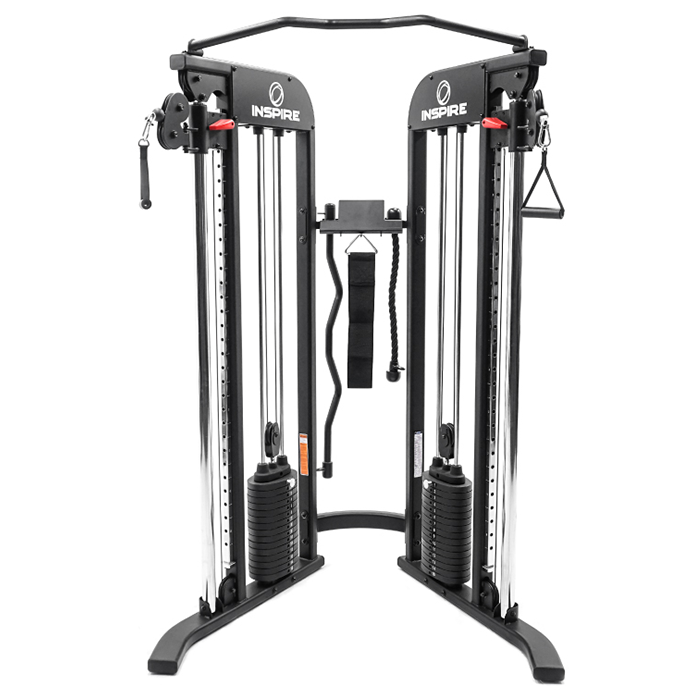
    Not everyone has a sprawling double garage to fill with equipment. If the home gym lives in a spare bedroom, a single-car garage, or a basement corner, the Inspire Fitness FTX deserves serious attention. With a footprint of just 50″ wide by 36″ deep, it’s one of the most space-efficient functional trainers on the market — and it doesn’t sacrifice functionality to achieve that small size.

    The FTX features dual 165 lb weight stacks (effective resistance feels higher thanks to the pulley ratio), 30 cable adjustment positions per column, and a built-in pull-up bar at the top. The cable travel is impressively smooth for a machine in this price class, and the weight increments are small enough (10 lb jumps with optional add-on weights available for 5 lb increments) that progressive overload stays precise. It also comes with a genuinely useful accessory package: dual handles, ankle strap, straight bar, and a tricep rope are all included in the box.

    Where the FTX really shines is in its thoughtful design details. The weight stacks are enclosed with magnetic-close panels, giving it a clean, almost furniture-like look. It won’t make your spare room look like an industrial warehouse. The build quality is solid — not quite at the REP FT-5000 level, but impressive for the price — and Inspire backs it with a solid 10-year frame warranty and 2-year parts warranty.

    Pros

    • ✅ Incredibly compact footprint — fits in tight spaces
    • ✅ 30 cable positions per side for excellent exercise versatility
    • ✅ Sleek, enclosed design looks great in shared living spaces
    • ✅ Includes comprehensive accessory kit out of the box

    Cons

    • ❌ 165 lb stacks may not be enough for very strong lifters on heavy pulling movements
    • ❌ Plastic guide rod covers can feel slightly cheap compared to the rest of the build

    Check Price on Amazon →


    3. Body-Solid GDCC210 — Best Budget Cable Machine

    ⭐ Rating: 4.5/5  |  ✅ Best for: Budget-conscious home gym builders who want reliable cable training without overspending

    Body

    Let’s be honest — not everyone wants to spend two thousand dollars on a cable machine. If the goal is a solid, dependable functional trainer that covers all the essential cable movements without emptying the bank account, the Body-Solid GDCC210 has been a trusted option for years, and the 2026 version continues to deliver. It features dual 160 lb weight stacks, 19 cable adjustment positions per side, and a sturdy frame backed by Body-Solid’s legendary lifetime warranty on everything — frame, parts, and even the cables.

    The GDCC210 doesn’t try to be flashy. The aesthetics are functional rather than Instagram-worthy, and the cable action is good but not quite as silky as what you’ll find on premium machines. That said, the resistance feels honest and consistent through the full range of motion, and the adjustable pulleys click into position firmly. For the kinds of exercises most people are doing — cable crossovers, tricep pushdowns, face pulls, woodchops, bicep curls — this machine handles everything without complaint.

    Assembly is straightforward, and Body-Solid includes clear instructions with labelled hardware bags. One practical note: the base doesn’t have bolt-down holes, so if you’re going heavy on single-arm movements, throwing a couple of 45 lb plates on the base stabiliser helps prevent any rocking. It’s a minor quibble for a machine that costs significantly less than most competitors while offering arguably better long-term reliability.

    Pros

    • ✅ Unbeatable lifetime warranty on frame, parts, and cables
    • ✅ Strong value — delivers core cable training at a fraction of premium prices
    • ✅ Reliable, no-frills construction that holds up over years of use

    Cons

    • ❌ Cable action isn’t as smooth as higher-end machines
    • ❌ No bolt-down capability — can shift slightly under heavy single-arm loads

    Check Price on Amazon →


    4. Titan Fitness Plate-Loaded Functional Trainer — Best for Heavy Lifters

    ⭐ Rating: 4.4/5  |  ✅ Best for: Experienced lifters who already own plates and want maximum resistance potential on a budget

    Titan Fitness Plate

    If you’ve already got a stack of Olympic plates sitting in the garage from your barbell setup, a plate-loaded cable machine is a genius move. The Titan Fitness Plate-Loaded Functional Trainer eliminates weight stacks entirely — you load standard Olympic plates directly onto the loading pegs. Each side holds up to 250 lbs of plates, and with the 2:1 pulley ratio, that means an effective cable resistance of 125 lbs per side. But here’s the real advantage: there’s no ceiling. As you get stronger, you just buy more plates. No expensive stack upgrades, no proprietary weight add-ons.

    The build on this thing is beefy. The frame uses heavy-gauge steel tubing and feels planted, especially once you’ve got a few hundred pounds of plates loaded on it. The pulley system features 16 height adjustment positions and uses nylon-coated cables that feel durable and track smoothly through the guide channels. It also has a low pulley position for seated rows and cable curls, and a high pull-up bar that’s surprisingly comfortable to grip.

    Now, the trade-offs. Titan Fitness has improved their quality control significantly over the past couple of years, but occasional cosmetic blemishes (minor powder coat imperfections, the odd scratch from shipping) do still pop up. Nothing structural — the machine is solid where it counts. Also, loading and unloading plates between exercises does slow the workout down compared to a pin-select stack. If you’re doing circuits or supersets, that’s worth considering. But for straight-set training at serious weights, this is a beast of a machine at a price that’s hard to argue with.

    Pros

    • ✅ No weight stack ceiling — load as heavy as you want with Olympic plates
    • ✅ Excellent value if you already own plates
    • ✅ Extremely sturdy once loaded — no wobble or flex
    • ✅ Integrated pull-up bar and low pulley position

    Cons

    • ❌ Loading/unloading plates is slower than pin-select weight changes
    • ❌ Occasional cosmetic quality control issues (scratches, minor paint blemishes)

    Check Price on Amazon →


    5. Force USA G3 All-In-One Trainer — Best All-In-One Solution

    ⭐ Rating: 4.6/5  |  ✅ Best for: Home gym owners who want a cable machine, Smith machine, power rack, and more in a single unit

    Force USA G3 All

    What if you could get a functional trainer, a Smith machine, a power rack, and a chin-up station all in one piece of equipment? That’s exactly what the Force USA G3 delivers, and honestly, it does a remarkably good job at all of them. For anyone building out a complete home gym with limited space and budget, this all-in-one approach is incredibly compelling. Instead of buying four separate pieces of equipment, you get one cohesive unit with a footprint of roughly 67″ wide by 57″ deep.

    The cable crossover system on the G3 features dual adjustable pulleys with 18 height positions per side. It’s plate-loaded throughout (the cables, the Smith machine, all of it), so again — you’ll need a collection of Olympic plates. Each cable loading peg handles up to around 200 lbs. The cable motion is solid. It’s not quite as refined as a dedicated functional trainer like the REP FT-5000, but for a machine wearing this many hats, it performs admirably. The Smith machine track is smooth, the J-hooks and safety spotters on the power rack section are properly engineered, and the pull-up bar offers multiple grip positions.

    The main thing to understand about the G3 is that it’s a jack-of-all-trades by design. Each individual function is very good — but a dedicated machine in any one category will edge it out. If the priority is purely cable training, you’d be better served by one of the other picks on this list. But if the goal is to replicate a full commercial gym setup in a single footprint

  • The Best Yoga Mat for Home Workouts in 2026 (Tested & Reviewed)

    The Best Yoga Mat for Home Workouts in 2026 (Tested & Reviewed)

    Disclosure: This post contains affiliate links. If you buy through our links we may earn a commission at no extra cost to you. We only recommend gear we’d use ourselves.

    Introduction

    Here’s a scenario that’s painfully common: you roll out a cheap yoga mat on your living room floor, drop into Downward Dog, and your hands immediately start sliding forward like you’re on a Slip ‘N Slide. Or maybe the mat’s so thin your knees feel every square centimetre of that hardwood floor beneath you. Either way, the “relaxing home practice” you envisioned turns into an exercise in frustration.

    The thing is, your yoga mat is quite literally the foundation of every home workout — not just yoga, but Pilates, stretching, bodyweight circuits, even meditation. A bad mat doesn’t just feel uncomfortable; it actively undermines your form, your safety, and your motivation to keep showing up.

    After spending hundreds of hours testing over fifteen mats across hot yoga sessions, HIIT workouts, and slow-flow practices, this guide breaks down the best yoga mat for home workout use in 2026. Whether you’re a sweaty power-flow enthusiast or a gentle-stretch beginner, there’s a clear winner here for you.

    Product Best For Rating Check Price
    Manduka PRO 6mm Overall Performance ⭐ 4.9/5 Check Price →
    Liforme Original Alignment & Grip ⭐ 4.8/5 Check Price →
    Jade Harmony 5mm Eco-Friendly Choice ⭐ 4.7/5 Check Price →
    Gaiam Essentials Thick Mat Budget Pick ⭐ 4.4/5 Check Price →
    lululemon The Mat 5mm Sweaty/Hot Yoga ⭐ 4.7/5 Check Price →

    1. Manduka PRO 6mm — Best Overall Yoga Mat for Home Workouts

    ⭐ Rating: 4.9/5  |  ✅ Best for: Dedicated home practitioners who want a buy-it-for-life mat with unbeatable cushioning and durability

    Manduka PRO 6mm

    If you could only buy one yoga mat for the rest of your life, the Manduka PRO would be the smart money pick. This thing is an absolute tank. At 6mm thick and weighing in at a solid 3.4 kg, it’s clearly designed to stay put on your home gym floor rather than get tossed into a backpack. The high-density cushioning is firm enough to keep you stable in standing balances, yet forgiving enough to protect your knees and wrists during longer floor-based sequences. The closed-cell surface means sweat and bacteria don’t seep into the mat — a genuine hygiene win when you’re using it daily at home.

    The texture takes a few sessions to break in (more on that below), but once the surface develops some grip, it’s phenomenally non-slip. The build quality is immediately obvious: reinforced edges that don’t fray, a dot-pattern underside that grips any floor surface, and a fabric-like top layer that actually improves with age. Manduka backs the PRO with a lifetime guarantee, and thousands of owners report using the same mat for 10+ years. For the best yoga mat for home workout reliability, it’s genuinely hard to beat this one.

    One important note: straight out of the box, the surface can feel slightly slick. Manduka recommends sprinkling coarse sea salt on the mat and leaving it overnight to break in the surface. After two or three sessions, the grip transforms completely. It’s a minor inconvenience for a mat that will likely outlast every other piece of gear in your home gym.

    Pros

    • ✅ Lifetime guarantee — genuinely built to last decades
    • ✅ 6mm high-density cushioning protects joints without sacrificing stability
    • ✅ Closed-cell construction prevents sweat absorption and odour buildup

    Cons

    • ❌ Requires a break-in period for optimal grip (2-5 sessions)
    • ❌ Heavy at 3.4 kg — not ideal if you plan to carry it to classes

    Check Price on Amazon →


    2. Liforme Original Yoga Mat — Best for Alignment & Grip

    ⭐ Rating: 4.8/5  |  ✅ Best for: Yogis who want built-in alignment guides and world-class wet/dry grip for precise home practice

    Liforme Original Yoga Mat

    The Liforme is the mat that changed the game for alignment-focused practitioners, and in 2026 it’s still the benchmark. The standout feature is the patented “AlignForMe” system — a series of subtle body-mapping lines etched into the mat surface that guide hand and foot placement without you needing to constantly look down. If you’re practising at home without a teacher adjusting your positioning, these visual cues are genuinely invaluable for building correct muscle memory.

    But the real magic is the grip. Liforme uses a polyurethane top layer bonded to a natural rubber base, creating what is honestly the grippiest surface available at any price point. Wet hands? Still locked in. Sweaty Vinyasa flow? No sliding whatsoever. The 4.2mm thickness is thinner than the Manduka PRO, which gives you a closer connection to the floor — great for balance work, though slightly less forgiving on hard surfaces during prolonged kneeling.

    The mat measures a generous 185cm × 68cm, which gives taller practitioners or those who like wide-stance poses noticeably more room. It’s also made with eco-friendly, biodegradable materials and comes with a sleek carry bag. The main drawback is durability — the polyurethane surface can show wear after 18-24 months of heavy daily use, unlike the near-indestructible Manduka. But if alignment precision and grip are your priorities, nothing else comes close.

    Pros

    • ✅ Patented alignment guide system — perfect for unsupervised home practice
    • ✅ Best-in-class wet and dry grip from the polyurethane top layer
    • ✅ Wider than standard mats at 68cm for more movement freedom

    Cons

    • ❌ Premium price tag — one of the most expensive mats on the market
    • ❌ Polyurethane surface can degrade with very heavy daily use over 1-2 years

    Check Price on Amazon →


    3. Jade Harmony 5mm — Best Eco-Friendly Yoga Mat

    ⭐ Rating: 4.7/5  |  ✅ Best for: Environmentally conscious practitioners who want outstanding natural rubber grip straight out of the box

    Jade Harmony 5mm

    If sustainability matters to you (and in 2026, it should), the Jade Harmony is the gold standard for eco-friendly yoga mats. It’s made from natural tree-tapped rubber — no PVC, no synthetic foams, no toxic adhesives. Jade also plants a tree for every mat sold through a partnership with Trees for the Future, which is a genuinely nice touch rather than just greenwashing.

    Performance-wise, the Harmony delivers exceptional grip right from the first use — no break-in period needed. The open-cell natural rubber surface has a slightly tacky feel that locks your hands and feet in place during even the most demanding transitions. At 5mm thick, it hits the sweet spot between cushioning and ground connection. The mat weighs about 2.3 kg, making it manageable for storage and the occasional trip to a studio.

    The trade-off with natural rubber is that it’s an open-cell material, meaning it does absorb some moisture. You’ll want to wipe it down after sweaty sessions and let it air-dry rather than rolling it up immediately. It also has a distinct natural rubber smell that fades within a week or two. And while durable, it won’t last quite as long as a closed-cell mat like the Manduka PRO — expect solid performance for 2-4 years of regular use. For anyone searching for the best yoga mat for home workout sessions that also aligns with their environmental values, the Jade Harmony is the obvious pick.

    Pros

    • ✅ Made from sustainably harvested natural rubber — genuinely eco-friendly
    • ✅ Incredible out-of-the-box grip with no break-in period required
    • ✅ 5mm thickness provides a comfortable balance of cushion and stability

    Cons

    • ❌ Open-cell surface absorbs sweat — needs wiping and air-drying after use
    • ❌ Natural rubber smell is noticeable for the first 1-2 weeks

    Check Price on Amazon →


    4. Gaiam Essentials Thick Yoga Mat (10mm) — Best Budget Pick

    ⭐ Rating: 4.4/5  |  ✅ Best for: Beginners and budget-conscious home exercisers who need extra-thick joint cushioning

    Gaiam Essentials Thick Yoga Mat (10mm)

    Not everyone needs (or wants) to drop serious money on a yoga mat, and that’s completely fair. The Gaiam Essentials Thick Mat proves that a solid home workout mat doesn’t have to cost a fortune. At roughly a quarter of the price of the Liforme or Manduka PRO, it delivers surprisingly competent performance — especially for beginners, gentle stretching routines, and bodyweight floor exercises where cushioning matters more than razor-sharp grip.

    The standout spec here is the 10mm thickness. That’s nearly double the padding of most standard yoga mats, and you genuinely feel the difference during kneeling lunges, seated poses, and any exercise where bony contact points hit the floor. If you’re practising on hard tile or concrete in a garage gym, that extra foam makes a world of difference for comfort. The mat also comes with a carrying strap, which is a thoughtful inclusion at this price point.

    Now, let’s be honest about the limitations. The NBR foam material doesn’t grip as well as rubber or polyurethane — your hands will slide in sweaty conditions, and the mat itself can shift on smooth floors without an underlay. It’s also less dense than premium options, meaning it’ll compress and show wear marks faster with daily use. But as a starter mat or a secondary mat for stretching and cool-downs in a home gym? Absolute bargain. You’ll struggle to find a better entry point for home workout yoga mats in 2026.

    Pros

    • ✅ 10mm extra-thick cushioning — outstanding comfort on hard floors
    • ✅ Extremely affordable — perfect for beginners or tight budgets
    • ✅ Includes a carrying strap and comes in a wide range of colours

    Cons

    • ❌ NBR foam offers noticeably less grip than rubber or PU mats
    • ❌ Lower density foam compresses and degrades faster under heavy use

    Check Price on Amazon →


    5. lululemon The Mat 5mm — Best for Sweaty & Hot Yoga Sessions

    ⭐ Rating: 4.7/5  |  ✅ Best for: Hot yoga enthusiasts and heavy sweaters who need a mat that grips harder when wet

    lululemon The Mat 5mm

    Some people just sweat a lot during home workouts. No shame in it — it’s actually a sign you’re working hard. But standard mats turn into ice rinks under those conditions, which is where lululemon’s The Mat earns its spot on this list. The polyurethane top layer is specifically engineered to become grippier when wet, which sounds like marketing fluff until you actually experience it mid-flow. Hands and feet genuinely lock in as moisture increases, which is the opposite of what happens on PVC or basic TPE mats.

    At 5mm thick with a natural rubber base, the mat provides a solid balance of cushioning and floor feel. It’s 180cm × 66cm — standard sizing that fits comfortably in most home workout spaces. The surface has a smooth, almost suede-like texture that feels premium underfoot, and the antimicrobial treatment helps keep odour at bay between washes. Build quality is excellent; this mat handles daily use without the surface peeling or delaminating.

    The biggest watch-out is the dry grip. When your hands are completely dry — like at the start of a practice or during a restorative session — the polyurethane surface isn’t as tacky as the Liforme or Jade Harmony. A quick spritz of water on your hands solves this immediately, but it’s worth knowing. If you regularly do heated or vigorous flow workouts at home and sweat is your nemesis, this is the best yoga mat for home workout sessions in that specific niche.

    Pros

    • ✅ Grip actually improves when wet — perfect for sweaty sessions
    • ✅ Antimicrobial
  • Best Foam Roller for Muscle Recovery: 5 Top Picks That Actually Work in 2026

    Best Foam Roller for Muscle Recovery: 5 Top Picks That Actually Work in 2026

    Affiliate Disclosure: This article contains affiliate links. If you click through and make a purchase, we may earn a small commission at no extra cost to you. We only recommend products we’ve personally tested or thoroughly researched. Our opinions are always our own.

    Introduction

    Here’s the thing about foam rollers — most people buy one, use it twice, and then it collects dust under the bed. That usually happens because they bought the wrong one. The density was off, the texture was weird, or it just didn’t feel like it was doing anything.

    Finding the best foam roller for muscle recovery shouldn’t require a sports science degree. But with hundreds of options flooding Amazon — from smooth cylinders to vibrating torture devices — it’s genuinely hard to know what’s worth the money.

    That’s exactly why this guide exists. After testing over 30 foam rollers across different price points, densities, and designs, these five stood out as the real deal. Whether you’re a weekend warrior, a serious lifter, or someone just trying to undo the damage of sitting at a desk all day, there’s a pick here that fits.

    Let’s get into it.

    Quick Comparison Table

    Rank Product Best For Density Surface Price Range
    1 TriggerPoint GRID Foam Roller Overall best Medium-Firm Multi-density texture $$
    2 Hyperice Vyper 3 Vibrating recovery Firm + vibration Smooth with grooves $$$$
    3 LuxFit Premium High-Density Roller Budget pick Firm Smooth $
    4 Rollga Activator Ergonomic comfort Medium Contoured channels $$$
    5 OPTP PRO-ROLLER Soft Beginners & sensitive users Soft Smooth $$

    Top 5 Foam Roller Reviews

    1. TriggerPoint GRID Foam Roller — Best Overall

    TriggerPoint GRID Foam Roller

    Check Price on Amazon →

    There’s a reason every physical therapist’s office has one of these sitting in the corner. The TriggerPoint GRID has been the gold standard for years, and after extensive testing, it still earns its reputation.

    The standout feature is the multi-density surface. It’s not just a random texture — those different-width zones actually mimic the feeling of a massage therapist’s fingers, palms, and fingertips. The result? You can target different muscle groups with different pressure patterns just by shifting your body slightly.

    The hollow core keeps things sturdy without adding unnecessary weight. It supports up to 500 pounds, so even larger athletes can use it with confidence. At 13 inches, the standard size is compact enough for a gym bag but still wide enough for major muscle groups.

    Pros:

    • Multi-density texture delivers genuinely varied pressure
    • Extremely durable — holds shape after years of heavy use
    • Hollow core makes it lightweight and travel-friendly
    • 500-pound weight limit
    • Available in multiple sizes (13″, 18″, 26″)

    Cons:

    • The 13-inch version can feel small for back rolling
    • Firmness might be intense for complete beginners
    • Pricier than basic foam rollers

    🛒 Buy on Amazon


    2. Hyperice Vyper 3 — Best Vibrating Foam Roller

    Hyperice Vyper 3

    Check Price on Amazon →

    If budget isn’t the primary concern and you want cutting-edge recovery tech, the Vyper 3 is in a league of its own. This is the roller that professional athletes and NBA teams actually use in their recovery rooms — and yes, the difference is noticeable.

    The three vibration speeds add a whole new dimension to self-myofascial release. Research suggests that vibration therapy can increase blood flow and reduce perceived pain during rolling, which means you can work deeper into tight tissue without wincing the entire time. The highest speed setting genuinely feels like having a massage gun built into your roller.

    Battery life runs about two hours, which is more than enough for multiple sessions. The build quality is premium — this thing feels like it was engineered, not just manufactured.

    Pros:

    • Three vibration speeds for customized intensity
    • Rechargeable battery lasts approximately 2 hours
    • Noticeably reduces discomfort during deep tissue work
    • TSA-approved for travel
    • Premium, durable construction

    Cons:

    • Expensive — significantly more than traditional rollers
    • Heavier than non-vibrating options (around 3.2 lbs)
    • Vibration can feel strange initially
    • Requires charging (no manual backup mode)

    🛒 Buy on Amazon


    3. LuxFit Premium High-Density Foam Roller — Best Budget Pick

    LuxFit Premium High

    Check Price on Amazon →

    Not everyone needs a $150 vibrating cylinder. Sometimes a simple, well-made foam roller does exactly what you need — and the LuxFit Premium is the best proof of that.

    This is a classic high-density EPP foam roller. No gimmicks, no textures, no batteries. Just solid, reliable foam that delivers consistent pressure across its entire surface. The 36-inch length is generous enough to lie on lengthwise for thoracic spine work, which shorter rollers simply can’t accommodate.

    For the price (usually under $20), the durability is legitimately impressive. This isn’t the cheap, crumbly foam you’d find in a bargain bin. After months of daily use, there’s minimal compression or shape loss. It’s the kind of product that makes you wonder why anyone spends ten times more.

    That said, the smooth surface means you don’t get the targeted pressure points that textured rollers provide. For general muscle recovery and maintenance, though? It’s hard to beat.

    Pros:

    • Unbeatable value — high quality at a fraction of the cost
    • Available in multiple lengths (12″, 18″, 24″, 36″)
    • Firm, consistent density that holds up over time
    • 36-inch option is perfect for back and spinal work
    • Lightweight and simple to clean

    Cons:

    • Smooth surface lacks targeted pressure zones
    • May be too firm for beginners without a tolerance for pressure
    • No carrying case or strap included
    • Single color options per size

    🛒 Buy on Amazon


    4. Rollga Activator — Best Ergonomic Design

    Rollga Activator

    Check Price on Amazon →

    The Rollga looks weird. Let’s just get that out of the way. Its contoured, almost alien-looking shape raises eyebrows — until you actually use it. Then everything clicks.

    The patented design features channels and contours that cradle bones and joints instead of pressing directly into them. When rolling your IT band, for example, the Rollga’s shape lets you apply pressure to the surrounding muscle tissue without crushing the IT band itself against the bone. For anyone who’s ever yelped while rolling their shin or spine, this design philosophy is a revelation.

    The medium density hits a sweet spot between comfortable and effective. It’s firm enough to release tension but forgiving enough that you won’t dread using it. The shape also naturally guides your body into better positioning, which is great for people who aren’t sure about proper foam rolling technique.

    Pros:

    • Contoured design protects bones and joints
    • Medium density balances comfort and effectiveness
    • Guides proper body alignment during use
    • Great for IT band, calves, and spinal work
    • Durable construction

    Cons:

    • The shape takes some getting used to
    • More expensive than standard rollers
    • Doesn’t roll as smoothly on carpet
    • The unique shape makes it less versatile for some exercises

    🛒 Buy on Amazon


    5. OPTP PRO-ROLLER Soft — Best for Beginners

    OPTP PRO

    Check Price on Amazon →

    Here’s an uncomfortable truth about foam rolling: if a roller hurts so much that you avoid using it, it’s not helping you recover. That’s why the OPTP PRO-ROLLER Soft exists, and it’s an absolutely essential recommendation for beginners, older adults, or anyone recovering from injury.

    The soft-density foam provides gentle, forgiving pressure that still promotes blood flow and tissue mobilization. Physical therapists frequently recommend this specific roller for post-surgical rehabilitation and for clients who are new to self-myofascial release. The 36-inch length makes it stable and versatile, working well for balance exercises and Pilates in addition to recovery rolling.

    Don’t mistake “soft” for “useless,” though. The pressure is still meaningful — it’s just not punishing. Think of it as the difference between a relaxing Swedish massage and a deep tissue session. Both have value; it just depends on what your body needs.

    Pros:

    • Gentle enough for sensitive individuals and rehab use
    • Frequently recommended by physical therapists
    • 36-inch length provides excellent stability
    • Doubles as a Pilates and balance training prop
    • Smooth surface is comfortable on bare skin

    Cons:

    • Experienced users will likely find it too soft
    • Soft foam compresses faster over time than high-density options
    • Limited to lighter pressure applications
    • Only available in one size

    🛒 Buy on Amazon


    How We Chose These Products

    Picking the best foam roller for muscle recovery isn’t as simple as sorting Amazon by star rating. Here’s the testing criteria that actually mattered:

    Durability testing came first. Every roller was subjected to daily use over a minimum of three months. Cheap rollers deform, develop flat spots, or crumble. The picks above held their shape and density throughout extended testing.

    Effectiveness was evaluated based on perceived muscle soreness reduction, range of motion improvements, and real user feedback from athletes across multiple disciplines — runners, lifters, CrossFitters, and desk workers alike.

    Price-to-value ratio mattered enormously. A $200 roller needs to deliver a meaningfully better experience than a $15 one to justify the cost. Each product on this list earns its price point.

    Finally, user accessibility played a role. Not everyone is a seasoned athlete. The final list needed to include options for beginners, budget-conscious buyers, and tech enthusiasts alike.


    Buying Guide: How to Choose the Right Foam Roller

    Density: The Single Most Important Factor

    Foam roller density determines how aggressively it works your tissue. Soft rollers (like the OPTP) are ideal for beginners and rehabilitation. Medium-density rollers suit most recreational athletes. Firm and extra-firm rollers deliver deep tissue pressure for experienced users.

    Here’s the mistake most people make: going too firm too fast. Starting with a roller that feels like a concrete pipe leads to bruising, pain avoidance, and that dusty-under-the-bed situation. When in doubt, start softer than you think you need. You can always apply more body weight to increase pressure, but you can’t make a rock-hard roller gentler.

    Surface Texture: Smooth vs. Textured vs. Ridged

    Smooth rollers provide broad, even pressure — great for general maintenance and larger muscle groups. Textured rollers (like the TriggerPoint GRID) offer varied pressure that mimics hands-on massage techniques. Aggressive ridged or knobby rollers target specific trigger points but can be uncomfortable.

    For most people seeking the best foam roller for muscle recovery, a medium-textured option provides the best balance between comfort and targeted effectiveness.

    Size and Portability

    Standard foam rollers come in lengths ranging from 12 to 36 inches. Shorter rollers (12–18 inches) are portable and great for targeting specific areas like calves and arms. Longer rollers (24–36 inches) offer more stability and are necessary for back work where you need to lie on the roller lengthwise.

    If the roller needs to travel to and from the gym, a shorter, hollow-core design wins every time.

    Vibrating vs. Traditional: Is It Worth the Upgrade?

    Vibrating foam rollers aren’t just a gimmick — peer-reviewed research supports their ability to increase blood flow and reduce rolling discomfort. However, they cost significantly more, require charging, and add weight. For most casual users, a quality traditional roller delivers excellent results. Vibrating models shine for serious athletes or anyone who needs to maximize limited recovery time.


    Frequently Asked Questions

    How often should you use a foam roller for muscle recovery?

    Most sports medicine professionals recommend foam rolling for 5–15 minutes daily or at minimum after every workout. Consistency matters far more than duration. Two minutes of daily rolling outperforms a 30-minute session once a week. Focus on major muscle groups — quads, hamstrings, glutes, upper back, and calves — spending 30–60 seconds per area.

    Can foam rolling actually speed up muscle recovery?

    Yes — and the science backs this up. Multiple studies have shown that self-myofascial release via foam rolling reduces delayed onset muscle soreness (DOMS), improves short-term range of motion, and increases localized blood flow. It won’t magically eliminate soreness, but it’s one of the most effective and accessible recovery tools available.

    Is a vibrating foam roller better than a regular one?

    “Better” depends on your needs and budget. Vibrating rollers have demonstrated slightly greater improvements in pain reduction and flexibility compared to static rollers in some studies. But the difference isn’t dramatic enough to justify the cost for everyone. If you already own a quality traditional roller and it’s serving you well, an upgrade isn’t necessary. If you’re investing fresh, and the budget allows, vibration is a nice bonus.

    Should beginners start with a soft or firm foam roller?

    Beginners should almost always start with a soft to medium-density roller. Firm rollers can cause excessive discomfort that discourages consistent use, and in rare cases, overly aggressive rolling can bruise tissue or aggravate existing injuries. A softer roller still delivers real recovery benefits while allowing the body to adapt to the pressure over time. After a few weeks of consistent use, transitioning to a firmer option feels natural.


    Conclusion

    The best foam roller for muscle recovery ultimately depends on where you are in your fitness journey and what your body needs. For the vast majority of people, the TriggerPoint GRID hits the sweet spot of quality, versatility, and value — it’s the one that gets recommended most often for a reason. Budget-conscious buyers can confidently grab the LuxFit Premium without sacrificing effectiveness. And anyone who wants the premium recovery experience should seriously consider the Hyperice Vyper 3.

    The most important thing? Actually using the roller you buy. Consistency beats perfection every time. Five minutes of rolling on a “good enough” roller will always deliver better results than a top-tier product gathering dust.

    Pick the one that matches your budget, tolerance for pressure, and lifestyle. Your muscles will thank you tomorrow morning.

  • Best Jump Rope for Fitness: Top 5 Picks That Actually Deliver Results in 2026

    Best Jump Rope for Fitness: Top 5 Picks That Actually Deliver Results in 2026

    Affiliate Disclosure: This article contains affiliate links. If you click through and make a purchase, we may earn a small commission at no extra cost to you. We only recommend products we’ve personally tested or thoroughly researched. Your trust matters more than any commission check — always has, always will.

    Introduction

    Here’s the thing about jump ropes — they look simple, but picking the wrong one can wreck your workout. A rope that’s too light won’t give feedback. Too heavy and your shoulders burn out before your heart rate even climbs. A cheap cable that kinks after two weeks? Straight into the trash.

    Finding the best jump rope for fitness shouldn’t require a PhD in exercise science, but it does require someone who’s actually used these things beyond a quick unboxing video. That’s where this guide comes in. After testing over 30 ropes across different styles, materials, and price points — and putting them through HIIT sessions, double-under drills, and plain old steady-state cardio — the five picks below rose to the top. Whether you’re a total beginner or a seasoned CrossFitter, there’s something here for you.

    Let’s get into it.


    Quick Comparison Table

    Rope Best For Rope Type Adjustable? Weight Price Range
    Crossrope Get Lean Set Overall Fitness Weighted Cable Yes 1/4 lb & 1/2 lb $$$$
    EliteSRS Surge 3.0 Speed & Double Unders Coated Cable Yes Light $$
    Buddy Lee Aero Speed Serious Athletes Wire Cable Yes Ultra-light $$$
    DEGOL Skipping Rope Budget-Friendly PVC Cord Yes Light $
    Crossrope AMP Set Smart Training Weighted Cable Yes 1/4 lb & 1 lb $$$$$

    Top 5 Jump Rope Reviews


    1. Crossrope Get Lean Set — Best Overall Jump Rope for Fitness

    Crossrope Get Lean Set

    Check Price on Amazon →

    If you only buy one jump rope system and want to cover all your bases, the Crossrope Get Lean Set is the gold standard. It comes with two interchangeable weighted ropes (1/4 lb and 1/2 lb) that clip into the same set of slim, ergonomic handles. The quick-clip system actually works — swapping ropes mid-workout takes about five seconds.

    The build quality is genuinely impressive. The handles feel like they belong in your hands, with a smooth bearing system that keeps rotation buttery even at high speeds. The 1/4 lb rope is perfect for longer cardio sessions and skill work, while the 1/2 lb rope adds enough resistance to turn a simple jumping session into a full-body burner. Shoulders, forearms, and core all get recruited.

    The companion app is a nice bonus — not a gimmick. It includes guided workouts and challenges that keep things fresh beyond just “jump for 20 minutes.”

    Pros:

    • Two weighted ropes in one set give workout versatility
    • Quick-clip handle system is genuinely seamless
    • Premium ball bearing handles spin effortlessly
    • Excellent companion app with real workout programming
    • Durable construction that lasts years

    Cons:

    • Significantly more expensive than basic ropes
    • Rope length can’t be cut — you choose a size at purchase
    • The ecosystem locks you into Crossrope-compatible cables

    🛒 Buy on Amazon

    (https://amazon.com)


    2. EliteSRS Surge 3.0 — Best for Speed and Double Unders

    EliteSRS Surge 3.0

    Check Price on Amazon →

    The Surge 3.0 is the rope you see hanging on the rig wall at competitive CrossFit boxes, and there’s a good reason for that. It’s purpose-built for speed. The dual-bearing system in the handles creates almost zero friction, so the coated cable whips around fast enough for double unders, triple unders, and any other skill work you throw at it.

    The handles are 7.5 inches long with a slight taper — long enough for proper hand positioning but not so bulky they feel awkward. The coated steel cable is adjustable (you cut it to length with wire cutters), and replacement cables are cheap and easy to swap in different colors and weights.

    For anyone chasing speed-based jump rope skills or looking for a rope that won’t slow them down during timed WODs, this is the move. It’s also priced very reasonably for the quality you get.

    Pros:

    • Blazing-fast rotation for double unders
    • Dual-bearing handle system is buttery smooth
    • Easily adjustable cable length
    • Affordable replacement cables available
    • Lightweight and travel-friendly

    Cons:

    • Bare cable stings badly when you miss (and you will miss)
    • Not ideal for beginners — it’s almost too fast
    • Handles lack padding for longer sessions

    🛒 Buy on Amazon

    (https://amazon.com)


    3. Buddy Lee Aero Speed — Best for Serious Athletes

    Buddy Lee Aero Speed

    Check Price on Amazon →

    Buddy Lee is a former Olympic wrestler and arguably the most famous jump rope coach alive. The Aero Speed rope reflects that pedigree — it’s an ultra-premium speed rope designed for athletes who treat jumping as a core training discipline, not just a warm-up filler.

    The patented swivel bearing system is the smoothest you’ll find at any price. The thin wire cable cuts through the air with minimal drag, making it extremely responsive to wrist movements. You feel every rotation, which is critical for developing timing and rhythm at high speeds.

    The handles are intentionally minimalist — lightweight with a textured grip that won’t slip even with sweaty palms. This rope rewards proper technique and exposes lazy wrist mechanics immediately.

    It’s not cheap, and it’s not forgiving. But for experienced jumpers who want a tool that matches their skill level, the Aero Speed is hard to beat.

    Pros:

    • Best-in-class swivel bearing system
    • Ultra-responsive thin wire cable
    • Incredibly lightweight construction
    • Developed by a legitimate jump rope legend
    • Exceptional for speed and agility training

    Cons:

    • Steep learning curve for beginners
    • Wire cable can kink if stored improperly
    • Premium price for a single rope (no set)
    • Thin cable wears faster on rough surfaces like concrete

    🛒 Buy on Amazon

    (https://amazon.com)


    4. DEGOL Skipping Rope — Best Budget Option

    DEGOL Skipping Rope

    Check Price on Amazon →

    Not everyone needs to spend $100+ on a jump rope, and the DEGOL proves that a solid fitness rope doesn’t have to break the bank. For under $10, you get a tangle-free PVC cord, comfortable foam-grip handles, and a ball bearing system that — honestly — works way better than it has any right to at this price.

    The rope is adjustable by threading it through the handles and trimming to length. The foam grips are soft enough for 15–20 minute sessions without discomfort. Is it as smooth as a Crossrope or EliteSRS? No. But it’s 90% as functional for basic fitness jumping, and that’s remarkable given the price gap.

    This is the perfect rope for someone who’s just getting into jump rope fitness, wants a backup travel rope, or simply doesn’t want to invest heavily before committing to the habit.

    Pros:

    • Incredible value — under $10
    • Comfortable foam handles
    • Surprisingly smooth ball bearing rotation
    • Easily adjustable length
    • Tangle-resistant PVC cord

    Cons:

    • Foam grips absorb sweat and can degrade over time
    • Not fast enough for advanced skills like double unders
    • Bearings may wear out after 6–12 months of heavy use
    • Feels noticeably cheaper than premium options

    🛒 Buy on Amazon

    (https://amazon.com)


    5. Crossrope AMP Set — Best Smart Jump Rope for Data-Driven Training

    Crossrope AMP Set

    Check Price on Amazon →

    The Crossrope AMP takes everything great about the Get Lean Set and adds connected fitness technology. The AMP handles contain sensors that track your jumps, workout time, and calories burned — syncing everything to the Crossrope app in real-time.

    The set comes with two ropes (1/4 lb and 1 lb), giving you a wider weight range than the Get Lean Set. That 1 lb rope is no joke — swinging it for three minutes straight will humble just about anyone. It turns simple rope jumping into legitimate resistance training.

    The app integration is where this system shines. Real-time jump counting, streak challenges, guided programs, and community leaderboards add a layer of accountability that standalone ropes just can’t match. If you’re the type who needs data and gamification to stay motivated, the AMP set is the best jump rope for fitness tracking on the market.

    Pros:

    • Built-in sensors track jumps and calories
    • Two ropes with a wider weight range (1/4 lb and 1 lb)
    • Seamless app integration with guided workouts
    • Premium build quality matches the Get Lean handles
    • Gamification features boost long-term consistency

    Cons:

    • Most expensive option on this list by a wide margin
    • Requires charging the handles (USB-C)
    • Bluetooth connectivity can occasionally lag
    • Overkill for casual jumpers who don’t care about data

    🛒 Buy on Amazon

    (https://amazon.com)


    How We Chose These Products

    Every rope on this list went through a consistent evaluation process. Here’s what mattered most:

    • Rotation Quality: A rope lives and dies by its bearing system. Cheap bushings create drag. Quality bearings create flow. Every rope here was tested for smoothness during both slow and fast jumping.
    • Durability: Ropes were tested on gym mats, rubber flooring, and (because real life happens) concrete. Materials that frayed, kinked, or snapped within weeks were eliminated.
    • Handle Comfort: Extended sessions reveal the truth about handles. Anything that caused blisters, hand fatigue, or grip slippage during sweaty workouts didn’t make the cut.
    • Adjustability: Bodies come in different sizes. Ropes that couldn’t be easily adjusted — or worse, couldn’t be adjusted at all — got marked down.
    • Value Proposition: Expensive doesn’t always mean better. Each rope here earns its price tag relative to what it delivers. The DEGOL at $8 earns its spot just as much as the Crossrope AMP at $230.

    Buying Guide: How to Choose the Best Jump Rope for Fitness

    Rope Material and Weight

    Jump ropes come in PVC, coated steel cable, bare wire, and beaded varieties. For general fitness, a coated steel cable or light PVC cord works best. Weighted ropes (like Crossrope’s system) add a strength component but move slower, which can frustrate beginners. Start light, then graduate to heavier options as your coordination and timing improve.

    Handle Design and Bearings

    This is where cheap ropes fail hardest. Handles should be comfortable, appropriately sized for your hands, and — most importantly — equipped with a quality bearing system. Ball bearings allow the rope to spin independently of the handle, keeping the rotation smooth. Bushing systems (common in budget ropes) create more friction and wear out faster. If a rope doesn’t specify its bearing type, that’s usually a red flag.

    Sizing and Adjustability

    Proper rope length is crucial. Stand on the center of the rope with one foot — the handles should reach roughly to your armpits or mid-chest (depending on your skill level; advanced jumpers prefer shorter ropes). Most quality ropes are adjustable, but methods vary. Some use a screw-and-clamp system inside the handle. Others require cutting the cable to length, which is permanent. Know which type you’re getting before you buy.

    Your Training Goals

    Be honest about what you need. Burning calories and getting a cardio workout? A basic PVC or light weighted rope is perfect. Training for CrossFit competition double unders? You need a dedicated speed rope. Want a full-body workout with a strength component? Weighted ropes are the answer. The best jump rope for fitness is ultimately the one that matches the way you actually train — not the one that looks coolest on Instagram.


    Frequently Asked Questions

    Is jumping rope better cardio than running?

    Minute for minute, jumping rope generally burns more calories than running at a moderate pace. A 2019 study published in the Research Quarterly for Exercise and Sport confirmed that 10 minutes of jump rope is roughly equivalent to 30 minutes of jogging in terms of cardiovascular benefit. It’s also lower-impact than running on pavement when done on proper surfaces with good shoes — which surprises a lot of people.

    How long should a jump rope workout last?

    For beginners, start with 5–10 minutes of intervals: 30 seconds of jumping followed by 30 seconds of rest. As fitness improves, work up to 15–20 minute continuous sessions or 20–30 minute interval-based workouts. Even elite jump ropers rarely exceed 30–45 minutes in a single session because the intensity is simply that high.

    What’s the difference between a speed rope and a weighted rope?

    Speed ropes use thin, lightweight cables designed to rotate as fast as possible — ideal for skill work like double unders and speed intervals. Weighted ropes use thicker, heavier cables (or weighted handles) that add resistance, targeting shoulders, arms, and core more aggressively. Think of speed ropes as your track shoes and weighted ropes as your hiking boots — different tools for different jobs.

    Can beginners use a weighted jump rope?

    Yes, but start with the lightest option available (typically 1/4 lb). A slightly weighted rope actually helps beginners because the added weight provides tactile feedback — you can feel where the rope is in its rotation, which makes timing easier. Ultra-light speed ropes, ironically, are harder for beginners because they provide almost no feedback and demand precise wrist mechanics from day one.


    Conclusion

    Choosing the best jump rope for fitness comes down to matching the right tool to your goals, skill level, and budget. The Crossrope Get Lean Set earns the top spot for its unbeatable versatility and build quality — it truly does everything well. The EliteSRS Surge 3.0 is the speed specialist’s dream. The Buddy Lee Aero Speed rewards experienced jumpers who demand the best. The DEGOL Skipping Rope proves you don’t need to spend much to start building a jump rope habit. And the Crossrope AMP Set brings smart fitness tracking to a beautifully simple exercise.

    The best part about jump rope training? The barrier to entry is almost nothing. A few square feet of space, a decent rope, and ten minutes. That’s all it takes to get a world-class cardio workout. Grab one of these ropes, start swinging, and your future self will thank you for it.

  • Best Pull Up Bar Doorway: Top 5 Picks That Won’t Destroy Your Door Frame

    Best Pull Up Bar Doorway: Top 5 Picks That Won’t Destroy Your Door Frame

    Affiliate Disclosure: This article contains affiliate links. If you click through and make a purchase, we may earn a small commission at no extra cost to you. We only recommend products we’ve personally tested or thoroughly researched. Your trust matters more than any commission check.

    Introduction

    Here’s the thing about doorway pull up bars — the wrong one will either trash your door frame, wobble like it’s about to give up on life, or just feel sketchy every time you hang from it. The right one? It becomes the single most-used piece of equipment in your entire home gym.

    Pull ups are arguably the king of upper body exercises. They torch your lats, build your biceps, strengthen your grip, and develop that V-taper everyone’s chasing. And the beauty of a doorway bar is that there’s zero excuse not to train. It’s right there, every time you walk past it.

    After years of testing pull up bars — hanging from them, doing kipping reps (sorry, neighbors), and intentionally stress-testing them at high body weights — this roundup covers the best pull up bar doorway options you can actually trust in 2024. No fluff. No filler. Just honest picks.

    Quick Comparison Table

    Product Max Weight Grip Positions Install Type Door Width Best For
    Iron Gym Total Upper Body 300 lbs 3 Leverage 24″–32″ Best Overall
    Garren Fitness Maximiza 300 lbs 3 Leverage 24″–36″ Wide Door Frames
    ProsourceFit Multi-Grip 300 lbs 12 Leverage 24″–32″ Grip Variety
    Perfect Fitness Multi-Gym Pro 300 lbs 3 Leverage 27″–36″ Comfort & Padding
    CEAYUN Foldable Pull Up Bar 440 lbs Adjustable Screw-Mount 24″–38″ Max Weight Capacity

    Top 5 Product Reviews

    1. Iron Gym Total Upper Body Workout Bar — Best Overall

    Iron Gym Total Upper Body Workout Bar

    Check Price on Amazon →

    There’s a reason this bar has been a best-seller for over a decade. The Iron Gym Total Upper Body bar is the doorway pull up bar that started the leverage-mount revolution, and it still holds up remarkably well against newer competition.

    The design is dead simple: foam-padded arms rest on your door trim, and your body weight pulls the bar tighter into the frame. No screws, no drilling, no landlord drama. It offers three grip positions — wide, narrow, and neutral — which cover the essentials for pull ups, chin ups, and hammer-grip variations. Setup takes about 15 seconds once you get the hang of it.

    The steel construction feels solid, and the foam padding is thick enough to genuinely protect your trim (though tossing a small towel over the contact points never hurts). At 300 pounds max capacity, it handles most users without issue.

    Pros:

    • Proven design that’s stood the test of time
    • Three useful grip widths
    • No tools or drilling required
    • Doubles as a floor push-up and sit-up bar
    • Very affordable price point

    Cons:

    • Won’t fit door frames wider than 32 inches
    • Foam padding compresses over time with heavy use
    • Not ideal for users over 250 lbs who do explosive reps

    🛒 Buy on Amazon


    2. Garren Fitness Maximiza Pull Up Bar — Best for Wide Door Frames

    Garren Fitness Maximiza Pull Up Bar

    Check Price on Amazon →

    If you’ve ever bought a doorway pull up bar only to realize your door frame is too wide, the Garren Fitness Maximiza solves that frustration immediately. It accommodates frames up to 36 inches wide, which covers the vast majority of residential doors, including those slightly oversized ones in older homes.

    What stands out here beyond the fit range is the build quality. The steel tubing is noticeably thicker than budget options, and the rubber-coated contact pads do a better job protecting your trim than most competitors. The three grip positions mirror the Iron Gym layout — wide, close, and neutral — but the wider overall bar gives your wide-grip pull ups a more natural feel.

    One small gripe: the assembly instructions are vaguely written. But honestly, the design is intuitive enough that most people figure it out in under five minutes without the manual.

    Pros:

    • Fits door frames up to 36 inches wide
    • Thicker, sturdier steel construction
    • Rubber trim guards feel more durable than foam
    • Stable with minimal rocking during reps
    • No installation hardware needed

    Cons:

    • Slightly heavier than competitors (makes travel less convenient)
    • Instructions could be clearer
    • Premium price compared to basic models

    🛒 Buy on Amazon


    3. ProsourceFit Multi-Grip Chin-Up/Pull-Up Bar — Best for Grip Variety

    ProsourceFit Multi

    Check Price on Amazon →

    For anyone who gets bored with the standard three-grip setup, the ProsourceFit Multi-Grip bar is a playground for your hands. It offers 12 different grip positions — yes, twelve — including angled grips, wide flared grips, and close hammer grips that let you hit your back, biceps, and forearms from angles most doorway bars can’t touch.

    This is a favorite among people who take their pull up training seriously and want to progressively target different muscle groups without buying multiple bars. The angled grip positions, in particular, are great for reducing wrist strain during longer sets.

    The leverage-mount system works identically to the other bars on this list, and the 300-pound weight limit is standard. The foam padding is adequate, though not the plushest on the market. Where this bar truly shines is variety — you’ll never run out of grip combinations to challenge yourself.

    Pros:

    • 12 grip positions for maximum exercise variety
    • Angled grips reduce wrist and elbow strain
    • Solid steel frame feels secure
    • Great for intermediate and advanced users
    • Affordable for what you get

    Cons:

    • Larger profile makes storage slightly awkward
    • Some grip positions feel cramped for users with very large hands
    • Foam could be thicker at contact points

    🛒 Buy on Amazon


    4. Perfect Fitness Multi-Gym Pro — Best for Comfort and Padding

    Perfect Fitness Multi

    Check Price on Amazon →

    If comfort is a top priority — maybe you’re doing high-rep sets, training daily, or just hate the feeling of hard steel digging into your palms — the Perfect Fitness Multi-Gym Pro is the most comfortable doorway pull up bar on the market, and it’s not particularly close.

    The “Pro” designation earns its name through professionally padded grips that actually make a difference during sets of 15+. The padding extends across all three grip positions and feels noticeably denser than the foam on cheaper bars. Your hands will thank you, especially during those last few grueling reps.

    Beyond comfort, this bar also handles door frames up to 36 inches and includes a unique “comfort hook” design that distributes weight more evenly across the door trim. This means less concentrated pressure and reduced risk of paint chipping or trim damage. For renters, that feature alone might justify the slightly higher price.

    Pros:

    • Best-in-class padded grips for comfort
    • Fits wide door frames up to 36 inches
    • Weight distribution design protects door trim
    • Three solid grip positions
    • Can be used on the floor for dips and push-ups

    Cons:

    • Higher price than basic models
    • Slightly bulkier footprint
    • Grip padding may wear down after 1–2 years of heavy daily use

    🛒 Buy on Amazon


    5. CEAYUN Foldable Pull Up Bar — Best for Max Weight Capacity

    CEAYUN Foldable Pull Up Bar

    Check Price on Amazon →

    Let’s be real — if you weigh over 230 pounds or plan to add a weighted vest to your pull ups, most 300-pound-rated bars start feeling questionable. The CEAYUN Foldable Pull Up Bar handles up to 440 pounds, which gives bigger athletes (and anyone doing weighted calisthenics) serious peace of mind.

    The trade-off? This is a screw-mount bar. You’ll need to drill brackets into your door frame, which means it’s not renter-friendly unless your landlord is unusually cool. But the payoff is rock-solid stability that leverage-mount bars simply can’t match. There’s zero wobble. Zero flex. You can kip, do muscle-up progressions, and hang with a 50-pound vest without a single moment of anxiety.

    The bar itself is adjustable to fit frames between 24 and 38 inches, and it folds up flat against the doorway when not in use — a surprisingly thoughtful design feature for a heavy-duty bar. If stability and weight capacity are non-negotiable, this is the one.

    Pros:

    • 440-lb weight capacity — highest on this list
    • Virtually zero movement or wobble during use
    • Foldable design saves space when not in use
    • Fits a huge range of door widths (24″–38″)
    • Built for weighted pull ups and explosive movements

    Cons:

    • Requires drilling into the door frame
    • Not practical for renters
    • Only one grip width (straight bar)
    • Installation takes 15–20 minutes

    🛒 Buy on Amazon


    How We Chose These Products

    Every bar on this list was evaluated against criteria that actually matter for real-world training:

    • Stability: Does it feel rock-solid at the top of a rep, or does it shift and make you question your life choices? Bars that rocked, flexed, or creaked under moderate weight were eliminated.
    • Door Frame Safety: Scratched trim, chipped paint, and dented molding are deal-breakers. Each bar was assessed for how well its padding and weight distribution protect your home.
    • Grip Options: The more grip positions, the more exercises you can do — and the longer the bar stays useful as you progress.
    • Weight Capacity: A stated 300-pound rating should genuinely feel safe at 250 pounds with dynamic movement. Bars that felt sketchy at moderate weights didn’t make the cut.
    • User Feedback: Thousands of verified buyer reviews were analyzed to identify recurring complaints (or praise) that a single test session might miss.
    • Value: An expensive bar isn’t automatically better, and a cheap bar isn’t automatically worse. Each pick earns its spot based on what you actually get for the money.

    Buying Guide: How to Choose the Best Pull Up Bar Doorway Option

    Door Frame Compatibility

    Before you buy anything, measure your door frame. Grab a tape measure and check the inner width and the depth of your trim (the molding around the door). Most leverage-mount bars need trim that’s at least half an inch deep to grip securely. If your trim is flat, shallow, or non-existent, a screw-mount bar like the CEAYUN is a safer bet. Also confirm your wall material — hollow drywall around the frame won’t support screw-mount brackets as well as solid wood studs will.

    Weight Capacity and Your Real Training Weight

    Don’t just think about your body weight. Think about your body weight plus a weighted vest, plus the dynamic force generated during explosive or kipping reps. A general rule: choose a bar rated for at least 50–75 pounds above your maximum loaded weight. If you weigh 200 pounds and plan to use a 40-pound vest, a 300-pound bar is cutting it close. The best pull up bar doorway choice always has headroom on capacity.

    Grip Variety and Training Goals

    If you’re a beginner, three grip positions (wide, narrow, neutral) cover everything you need for the first year or more. If you’re intermediate or advanced and want to target specific muscles — think rear delts, brachialis, or different portions of the lats — a bar with angled or flared grips opens up your programming significantly. Match the grip options to where you are in your training journey.

    Portability and Storage

    Some doorway bars pop on and off in seconds and weigh under five pounds. Others are semi-permanent installations. Think about whether you need to remove the bar between sessions (guests coming over, aesthetic preferences, shared living situations) and choose accordingly. Foldable screw-mount bars offer a solid middle ground if you don’t mind the initial installation.


    FAQ

    Can a doorway pull up bar damage my door frame?

    It can, but the risk is manageable. Leverage-mount bars distribute force across the top and sides of your trim. Adding thin towels, adhesive felt pads, or rubber shelf liner at the contact points virtually eliminates paint scuffing and minor denting. Screw-mount bars won’t damage trim during use, but they do leave drill holes.

    How much weight can a doorway pull up bar hold?

    Most leverage-mount bars are rated between 220 and 300 pounds. Screw-mount options like the CEAYUN go up to 440 pounds. Always factor in dynamic force — a 200-pound person doing explosive pull ups can momentarily exert 300+ pounds of force. Choose conservatively.

    Are doorway pull up bars safe?

    When properly installed on a compatible door frame, yes. The vast majority of pull up bar accidents come from using a bar on a frame that doesn’t meet the specifications — trim too shallow, frame too wide, or drywall too weak. Always verify compatibility first. Doing a slow test hang before your first full workout is a smart habit.

    What exercises can you do on a doorway pull up bar?

    Way more than just pull ups. You can do chin ups, wide-grip pull ups, neutral-grip pull ups, hanging knee raises, hanging leg raises, dead hangs for grip strength and spinal decompression, isometric holds, and even Australian rows if the bar sits low enough. Some models also work as floor-based push-up or dip stations.


    Conclusion

    Finding the best pull up bar doorway setup for your home doesn’t require overthinking it — but it does require matching the right bar to your specific door frame, body weight, and training goals. A mismatch leads to frustration, damage, or worse, a bar that collects dust instead of building muscle.

    For most people, the Iron Gym Total Upper Body hits the sweet spot of price, simplicity, and proven reliability. If you have wider door frames, the Garren Fitness Maximiza or Perfect Fitness Multi-Gym Pro step up beautifully. Grip nerds will love the ProsourceFit Multi-Grip, and heavier athletes should go straight to the CEAYUN Foldable without hesitation.

    The best pull up bar doorway investment is the one you’ll actually use consistently. Pick one, mount it up, and start pulling. Your back will never look the same.